Rice & Fried Rice · Chinese home cooking
Yangzhou-Style Fried Rice
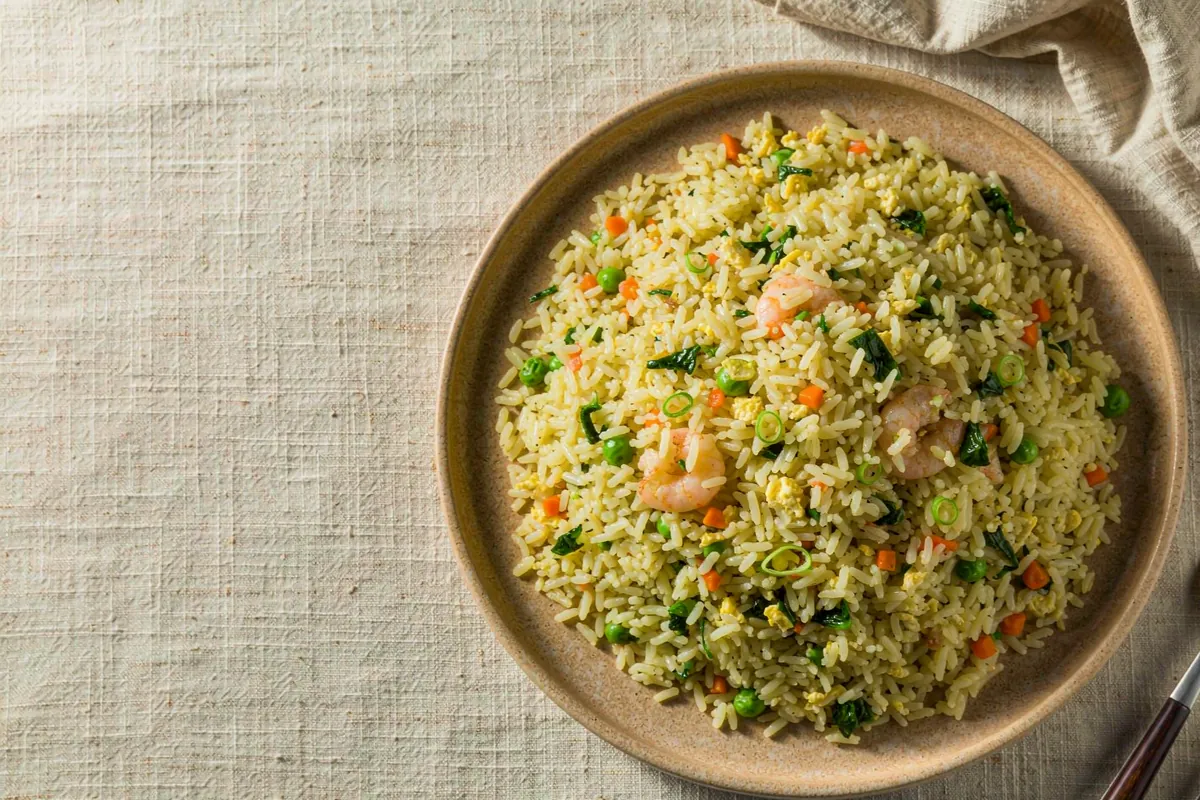
Day-old rice tossed with shrimp, diced pork, peas and soft egg curds, seasoned lightly so each ingredient stays distinct and the grains keep a dry, separate finish.
About this dish
Yangzhou fried rice is a test of order. Everything is cooked separately and reunited at the last moment, because shrimp, pork and peas each give off water at different rates. Line up small bowls before the wok goes on; assembly takes four minutes and there is no time to dice anything midway. You want the sharp sizzle of shrimp hitting hot oil, then the softer smell of egg and scallion. The plate should look pale gold, not brown, with pink, green and yellow clearly readable in every spoonful.
Before you start
Equipment: Wok. Tap the ingredient checkboxes as you go.
Method
7 steps · tick each one off as you finish it.
Prep the row
Break up the cold rice with a fork until no clumps remain, then beat the eggs with the salt for 15 seconds. Set out the shrimp, pork, peas, carrot, scallions and every seasoning in separate small bowls within reach of the stove.
Cook the shrimp
Heat 1 tbsp oil in a wok over high heat for 90 seconds until it shimmers. Add the shrimp and spread them in one layer for 40 seconds, turning once, until they are just pink and opaque with no grey patches. Tip onto a plate.
Scramble the eggs
Add another 1 tbsp oil, pour in the eggs and let them set for 5 seconds before pushing the edges inward. When large glossy curds form after about 35 seconds, transfer them to the plate with the shrimp; they will firm up later.
Fry the vegetables
Add the remaining 2 tbsp oil, then the white scallions, carrot and peas. Stir for 90 seconds until the carrot darkens slightly and the peas smell sweet. The carrot should still give a faint crunch when you press a cube against the wok.
Toast the rice
Add the rice in one go, spread it flat and leave it for 45 seconds so the bottom crackles. Toss, press flat and repeat twice, about 2 minutes total, until the grains look dry and separate and no steam rises in a thick cloud.
Season at the rim
Splash the Shaoxing wine and soy sauce down the hot side of the wok so they hiss and lose their raw edge, then toss for 30 seconds. Sprinkle over the sugar and white pepper and stir 5 times to distribute them evenly.
Reunite and serve
Turn off the heat. Return the shrimp and eggs, add the green scallions and sesame oil, and fold 6 times. Mound onto a warm platter; the grains should sit loosely, with pink, green and yellow pieces visible rather than hidden in sauce.
Tips that matter
- Cook the shrimp and eggs up to a day ahead and keep them covered in the fridge; the final stir-fry then takes under five minutes.
- Cut every mix-in to roughly the size of a pea so no single ingredient dominates a spoonful and everything heats through at the same rate.
Easy variations
- Replace the pork with 100 g diced firm tofu, pressed dry and browned in the wok first, for a meat-free plate.
- Add 60 g drained canned bamboo shoots with the carrot for extra crunch, and skip the sugar if the tin liquid is sweetened.
Questions that come up
Why does my rice go grey and wet?
The mix-ins went in wet or the wok was crowded. Pat the shrimp dry, thaw and drain the peas, and fry in two batches if your pan is under 30 cm.
Can I use freshly cooked rice?
Only if you spread it on a tray and chill it uncovered for 30 minutes first. Warm rice steams instead of toasting and will collapse into a soft mash.
Nutrition, roughly
| Energy | 520 kcal |
|---|---|
| Protein | 26 g |
| Carbohydrate | 62 g |
| Fat | 18 g |
Estimated per serving from standard ingredients, rounded. Treat it as a guide, not clinical data.
Rice, Water and Heat: A Ratio Field Guide
Why one cup of rice does not always want one cup of water, and how to tell a cooked pot from a steamed one before you lift the lid.