Noodles East · Chinese home cooking
Very Soft Cabbage Noodles
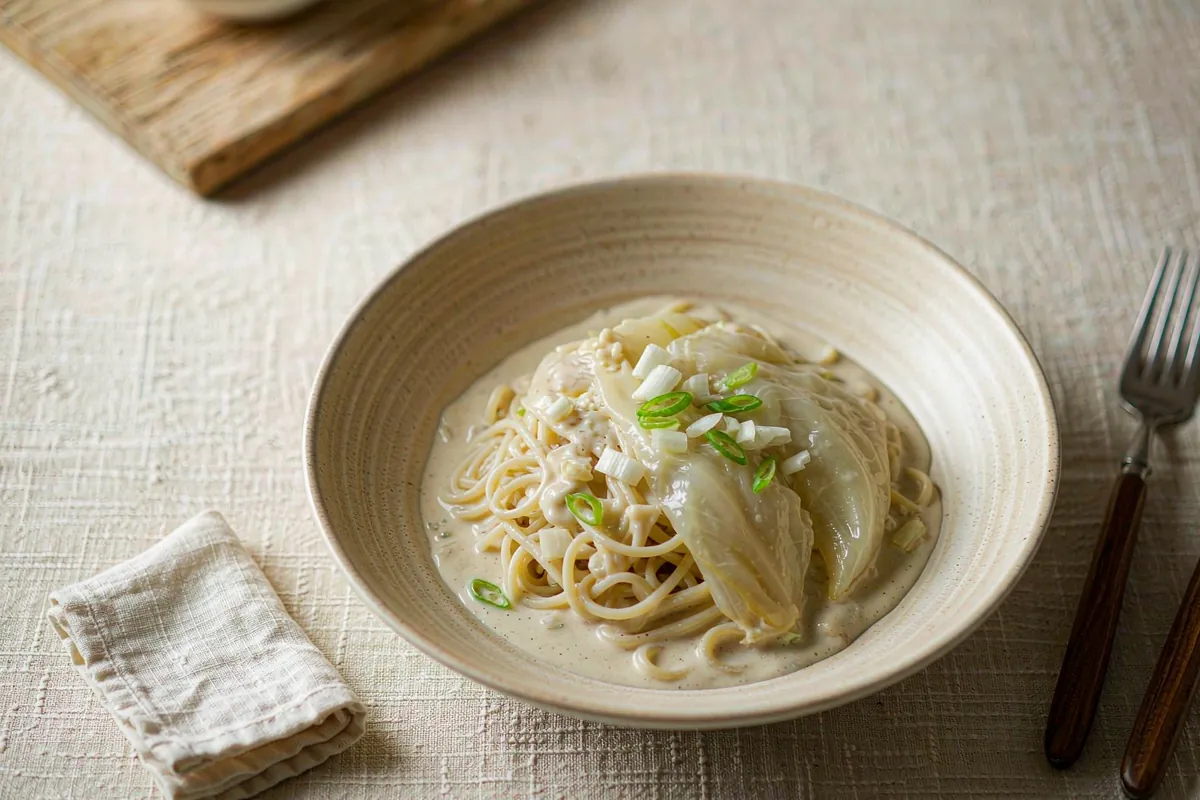
Cabbage is simmered until completely soft and sweet, then folded through tender noodles with a light soy glaze for a gentle, easy-to-eat bowl with no crunch left in the leaves.
About this dish
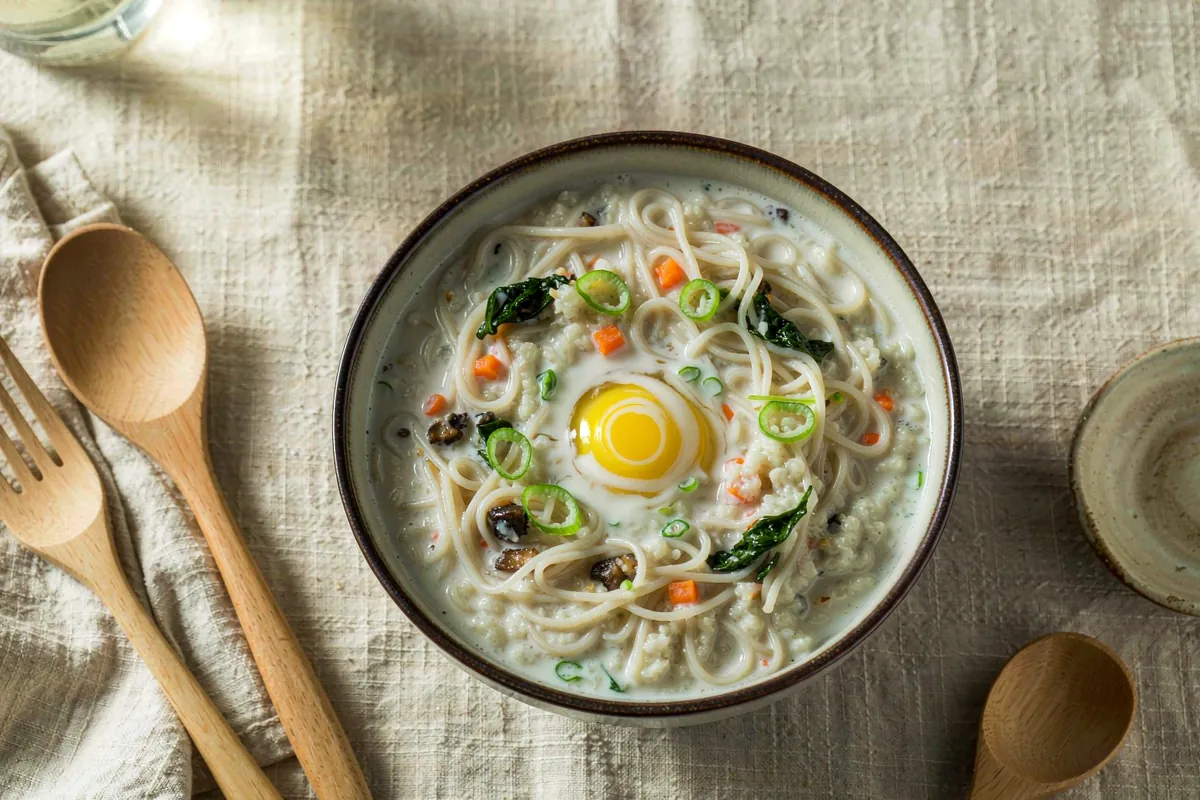
Where a stir-fry wants cabbage with snap, this dish wants the opposite: leaves cooked long enough to lose all their structure and turn silky, almost jammy. It is a mild bowl for anyone who wants easy chewing. The cabbage melts into the cooking liquid and sweetens it, so the noodles need little more than a splash of soy. A soft egg stirred through at the end rounds everything out. Expect a quiet simmer, the smell of warm cabbage, and a pale, glossy tangle that holds together on a spoon.
Before you start
Equipment: Pot, Skillet. Tap the ingredient checkboxes as you go.
Method
7 steps · tick each one off as you finish it.
Start the cabbage
Warm 1 tbsp oil in a wide pot over medium heat for 60 seconds, add 15 g ginger and stir for 30 seconds until fragrant. Add 400 g sliced cabbage and toss for 2 minutes to coat it in the oil.
Add liquid and simmer
Pour in 450 ml stock and 1/2 tsp sugar, cover and bring to a gentle simmer over medium-high heat for about 3 minutes. You will hear a low, steady bubbling and see steam escape at the lid.
Cook the cabbage down
Lower the heat to medium-low and simmer covered for 12 minutes, stirring once halfway. Call it done when the leaves have collapsed to a soft, translucent mass and a fork meets almost no resistance.
Add the noodles
Uncover, stir in 1 tbsp soy sauce and lay 160 g noodles over the cabbage, pressing them into the liquid. Simmer uncovered for 5 minutes, turning twice, until the strands are fully tender and the liquid has reduced to a glossy glaze.
Set the egg
Drop the heat to low so the surface barely moves. Drizzle 110 g beaten egg in a thin stream and wait 40 seconds before one slow fold; soft, pale sheets should appear and the glaze turn slightly creamy.
Season and rest
Turn off the heat, add 1 tsp sesame oil and 1/4 tsp white pepper, and fold gently. Let the pot stand for 2 minutes; it is ready when the noodles have drunk the glaze and look shiny, not wet.
Serve
Scatter 40 g scallions over the top and spoon the soft cabbage and noodles into warm shallow bowls. Serve while a faint steam still rises; the cabbage should hold no bite at all and slide off a spoon.
Tips that matter
- Do not rush the 12-minute covered simmer; this is where the cabbage loses its crunch and builds the sweet glaze.
- Keep the heat low for the egg, since a bubbling surface shreds it into tough flecks instead of soft sheets.
Easy variations
- Stir 80 g sliced shiitake in with the cabbage for an earthy depth and a slightly chewier contrast.
- Add 60 g thawed peas at the very end for small bursts of sweetness against the mild, soft leaves.
Questions that come up
Why is the dish watery instead of glossy?
It simmered covered at the end or the noodles were added to too much liquid. Finish uncovered so the stock reduces to a glaze, then rest 2 minutes off the heat.
Can I make it with leftover cooked noodles?
Yes. Add 250 g cooked noodles at step 4 and simmer for just 2 minutes to warm through, since they have already absorbed their water.
Nutrition, roughly
| Energy | 320 kcal |
|---|---|
| Protein | 13 g |
| Carbohydrate | 50 g |
| Fat | 9 g |
Estimated per serving from standard ingredients, rounded. Treat it as a guide, not clinical data.
Boiling Noodles and Pasta Well
Salt, water volume, the two-minute window and the starchy cooking liquid that most home cooks pour down the sink.