Noodles East · Chinese home cooking
Cloudy Vegetable Noodle Soup
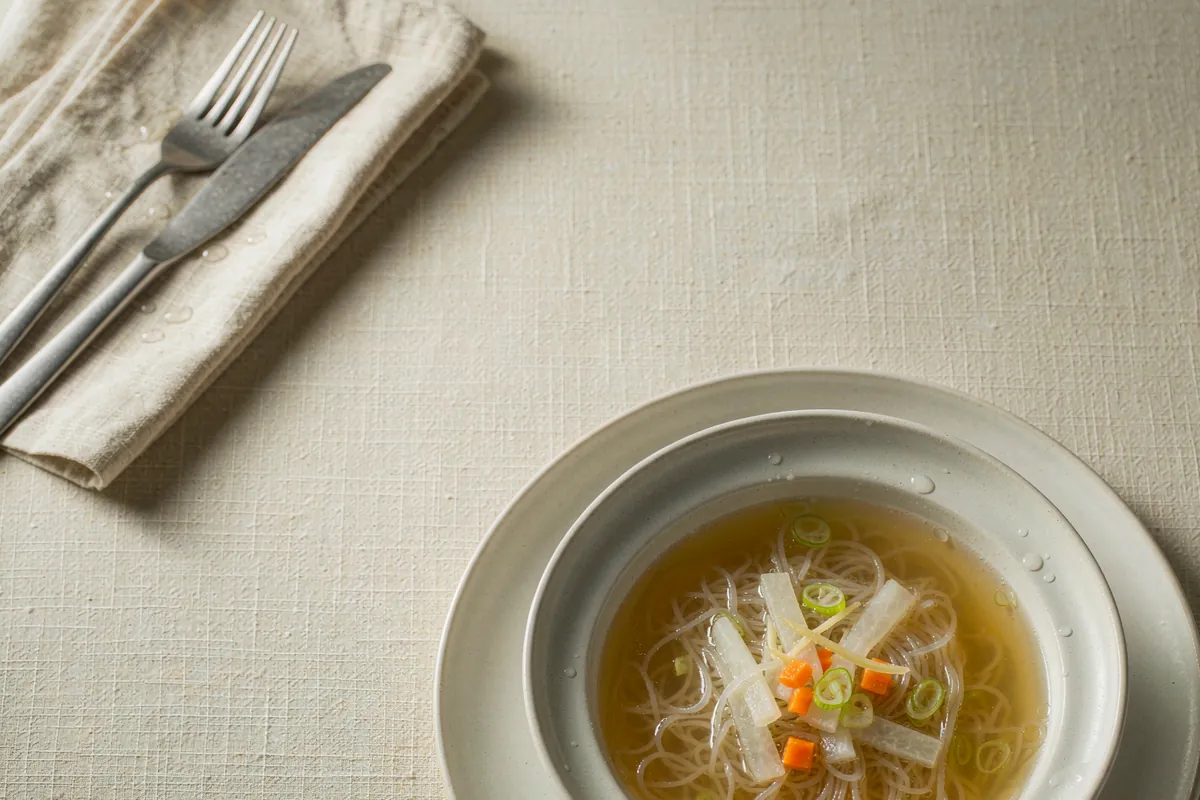
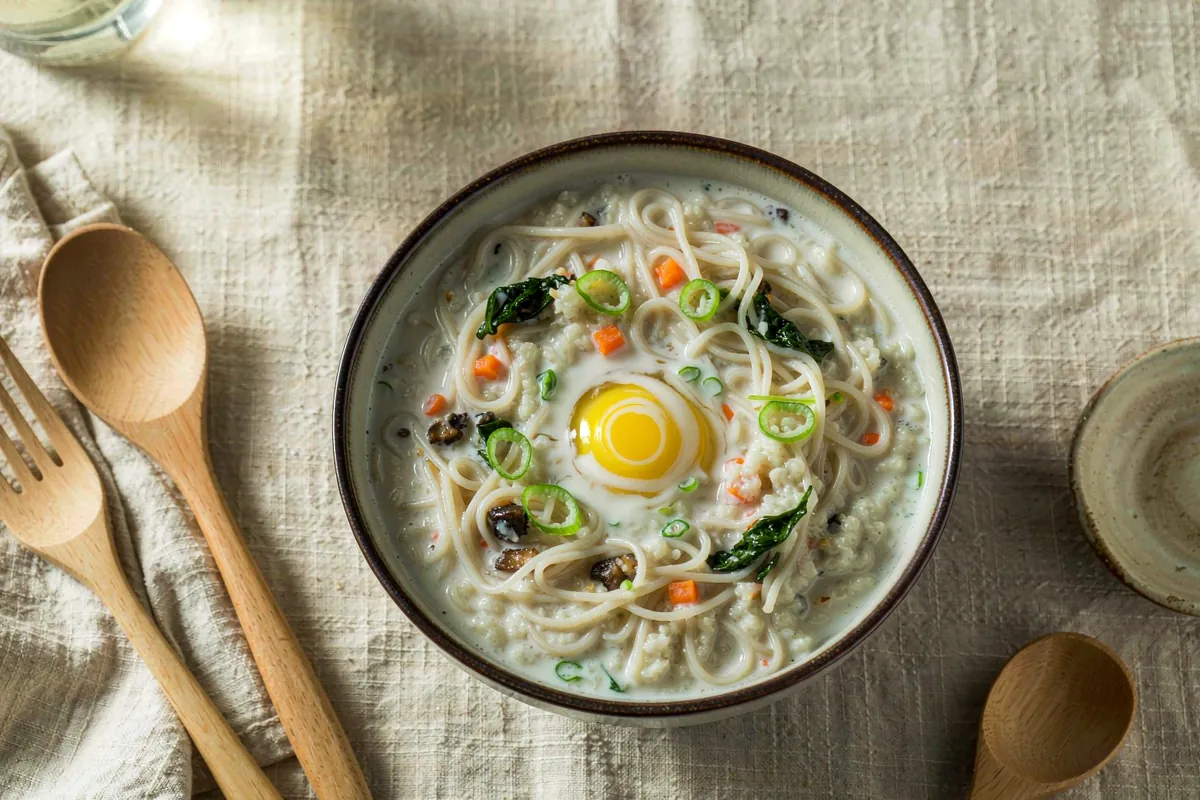
Hard-boiling softened vegetables with a beaten egg turns clear water into a pale, milky broth; tender noodles and greens simmer in it for a light yet creamy-tasting bowl with no dairy at all.
About this dish
The cloudiness is the point, and it comes from technique, not cream. Vegetables soften in a little oil first, then boiling water is added all at once and kept at a hard, noisy boil; the agitation breaks egg and vegetable juices into droplets that scatter light and turn the broth pale and opaque. It should look like weak tea stirred with milk, not a thick sauce. The smell is sweet and faintly earthy. Noodles and greens go in last so they stay distinct and bright against the white backdrop.
Before you start
Equipment: Pot, Skillet. Tap the ingredient checkboxes as you go.
Method
7 steps · tick each one off as you finish it.
Soften the vegetables
Set a pot over medium heat with 2 tbsp oil and add 120 g mushrooms and 120 g carrot. Fry for 4 minutes, stirring often, until the mushrooms have released their liquid, the carrot edges soften and the pan smells sweet and earthy.
Wilt the cabbage
Stir in 100 g shredded cabbage over medium heat for about 2 minutes, until it slumps and turns translucent at the edges. Off the heat, have 1200 ml just-boiled water and 110 g beaten egg ready beside the stove before the next step.
Force the cloudiness
Return the pot to high heat, pour in all 1200 ml boiling water at once and boil hard, uncovered, for 6 minutes. The broth is ready when it turns pale, milky and opaque and the surface churns with large, noisy bubbles.
Suspend the egg
Lower to a steady medium boil and drizzle 110 g beaten egg in a thin thread while stirring slowly for 60 seconds. Stop when fine, pale curds are suspended throughout and the broth looks even creamier, with no large egg sheets floating on top.
Cook the noodles
Add 250 g dried noodles and 1 tsp salt, and boil over medium-high heat for about 5 minutes, stirring once or twice. They are ready once pliable with a faintly firm centre and the broth has thickened slightly from their starch.
Add the greens
Fold in 100 g greens and simmer on low heat for 90 seconds. Take the pot off the heat when the leaves are just wilted but still a clear, bright green and the carrot cubes remain visible as small orange flecks in the white broth.
Season and ladle
Stir in 1 tbsp soy sauce, 1 tsp sesame oil and 1/4 tsp white pepper off the heat, rest 1 minute. Look for this: the broth stays opaque and steaming; ladle into bowls and top with 40 g scallions while the greens stay bright.
Tips that matter
- The water must be already boiling when it hits the pan; lukewarm water will not emulsify and the broth stays clear.
- Keep the boil lively and the lid off for the first 6 minutes; covering the pot or lowering the heat too early collapses the cloudiness.
Easy variations
- Add 100 g diced soft tofu with the greens for extra body without changing the flavour.
- Use 250 g rice noodles and reduce the boil to 3 minutes for a gluten-free version; check them early so they do not dissolve.
Questions that come up
My broth stayed clear instead of cloudy. Why?
Either the water was not at a hard boil or the lid was on. Boil uncovered over high heat for the full 6 minutes and add the water in one go, not in stages.
Can I make the base ahead?
Yes, but it may thin as it sits. Reheat to a hard boil for 2 minutes, stirring, to bring the milky look back before adding the noodles.
Nutrition, roughly
| Energy | 340 kcal |
|---|---|
| Protein | 13 g |
| Carbohydrate | 54 g |
| Fat | 9 g |
Estimated per serving from standard ingredients, rounded. Treat it as a guide, not clinical data.
Boiling Noodles and Pasta Well
Salt, water volume, the two-minute window and the starchy cooking liquid that most home cooks pour down the sink.