Dumplings & Steamed Buns · Chinese home cooking
Scallion Flower Rolls
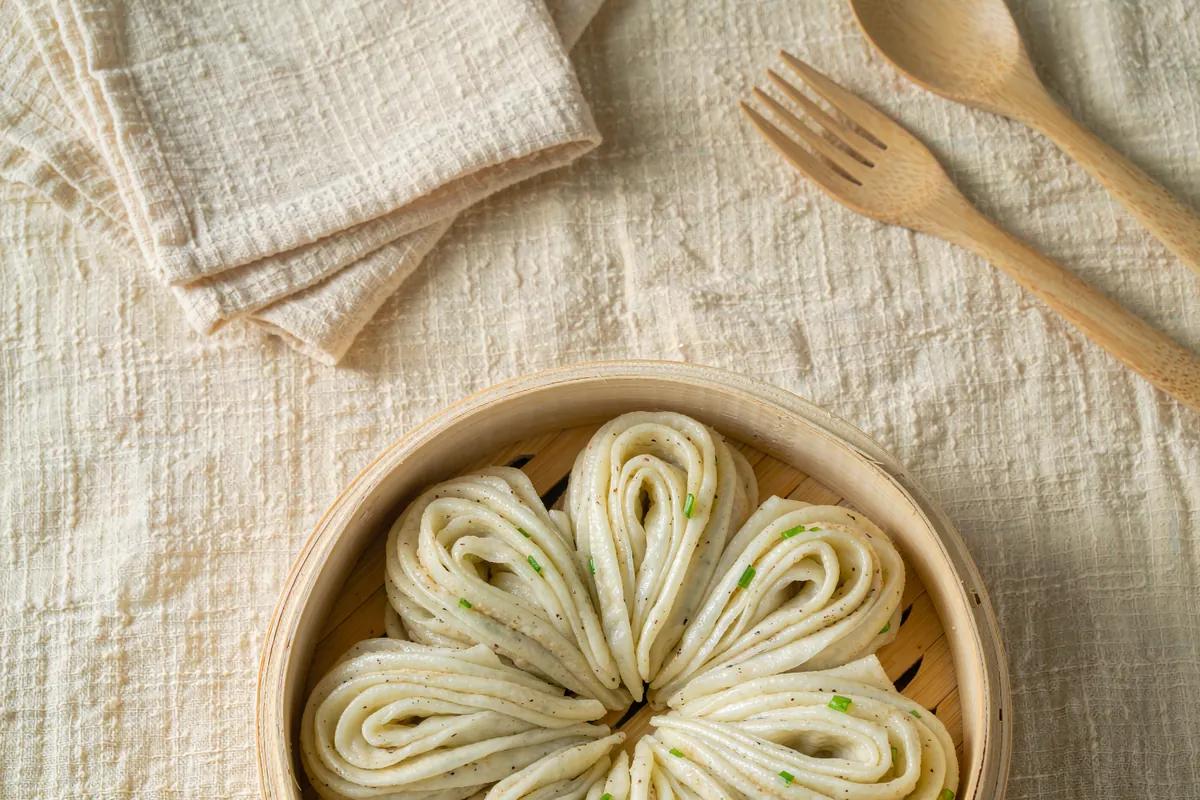
Yeast dough is brushed with scallion oil, folded into a thin ribbon and twisted into layered rosettes that steam into soft, pull-apart spirals with green flecks in every seam.
About this dish
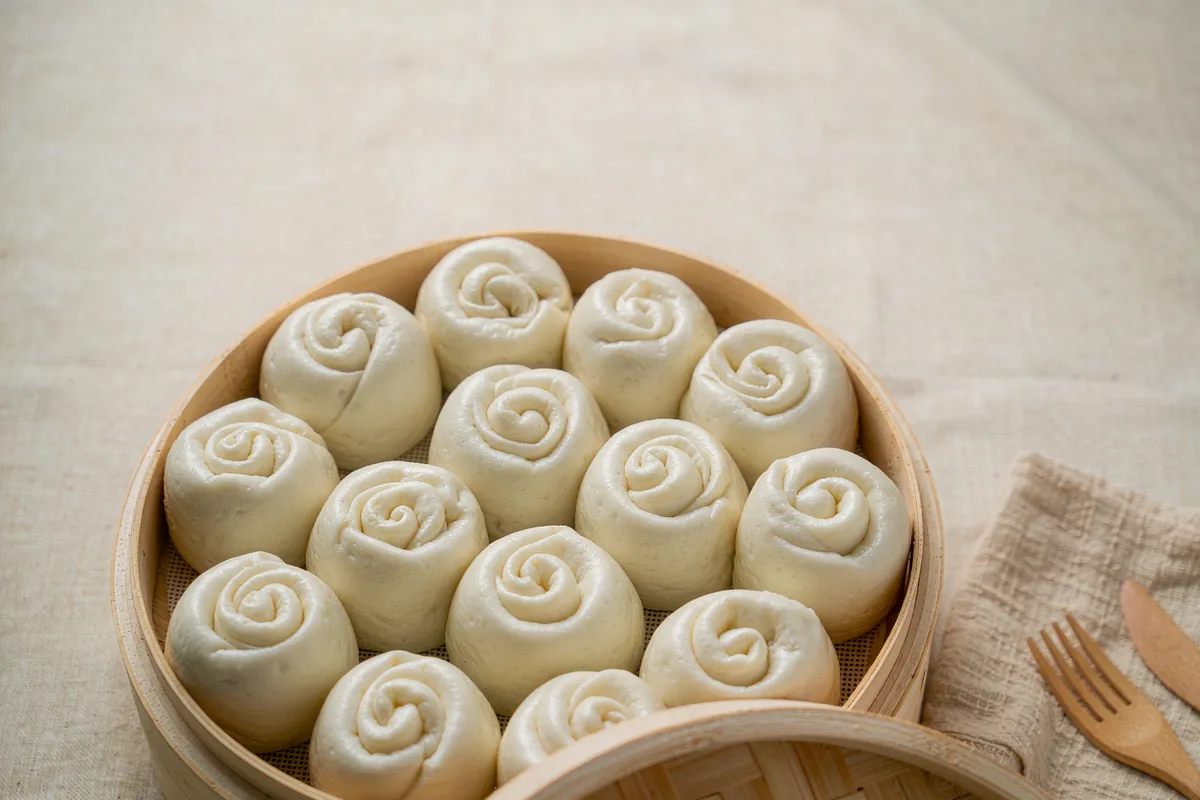
The trick is in the twist, not the filling. A thin sheet of dough is rolled up like a scroll, sliced, then turned so the cut edges fan outward into petals; each layer stays separate because oil sits between them. My grandmother pressed a chopstick down the middle of each roll and the dough would bloom open with a soft sigh. The kitchen smelled of warm scallions and toasted flour, and the rolls sat like pale green flowers, their centres still springy under a fingertip.
Before you start
Equipment: Steamer. Tap the ingredient checkboxes as you go.
Method
7 steps · tick each one off as you finish it.
Bloom the yeast
Stir the lukewarm water, sugar and yeast and leave for 8 minutes until a frothy cap forms and the mixture smells faintly of bread. Cold water here slows everything down; if the bowl is chilly, set it over warm water for 2 minutes.
Knead and first proof
Mix in the flour, salt and 20 ml oil, then knead for 9 minutes until the dough is satin-smooth and springs back slowly from a poke. Cover and proof at 27 C for 60 minutes, until doubled and full of fine air pockets when torn.
Make the scallion paste
Heat the 45 ml oil to 160 C until it shimmers, then pour it over 2 tbsp flour and salt and stir to a loose paste. Fold in the scallions, sesame oil and sesame seeds; the mixture should look glossy and spreadable, not dry.
Rest and roll the sheet
Degass the dough, knead 1 minute, then rest it 5 minutes under a cloth so the gluten slackens. Roll into a 40 x 30 cm rectangle about 3 mm thick, dusting with the reserved 30 g flour only where the dough catches.
Spread and fold
Spread the scallion paste over the whole sheet, leaving a 2 cm bare strip along one long edge. Brush that strip with cold water, then roll the dough tightly from the opposite edge into a log, and pinch the seam closed along its length.
Cut and twist into flowers
Slice the log into 12 pieces about 3 cm wide. For each roll, stack two pieces cut-side up and press a chopstick firmly down the centre so the layers splay outward, then pinch the ends underneath to hold the rosette open.
Second proof and steam
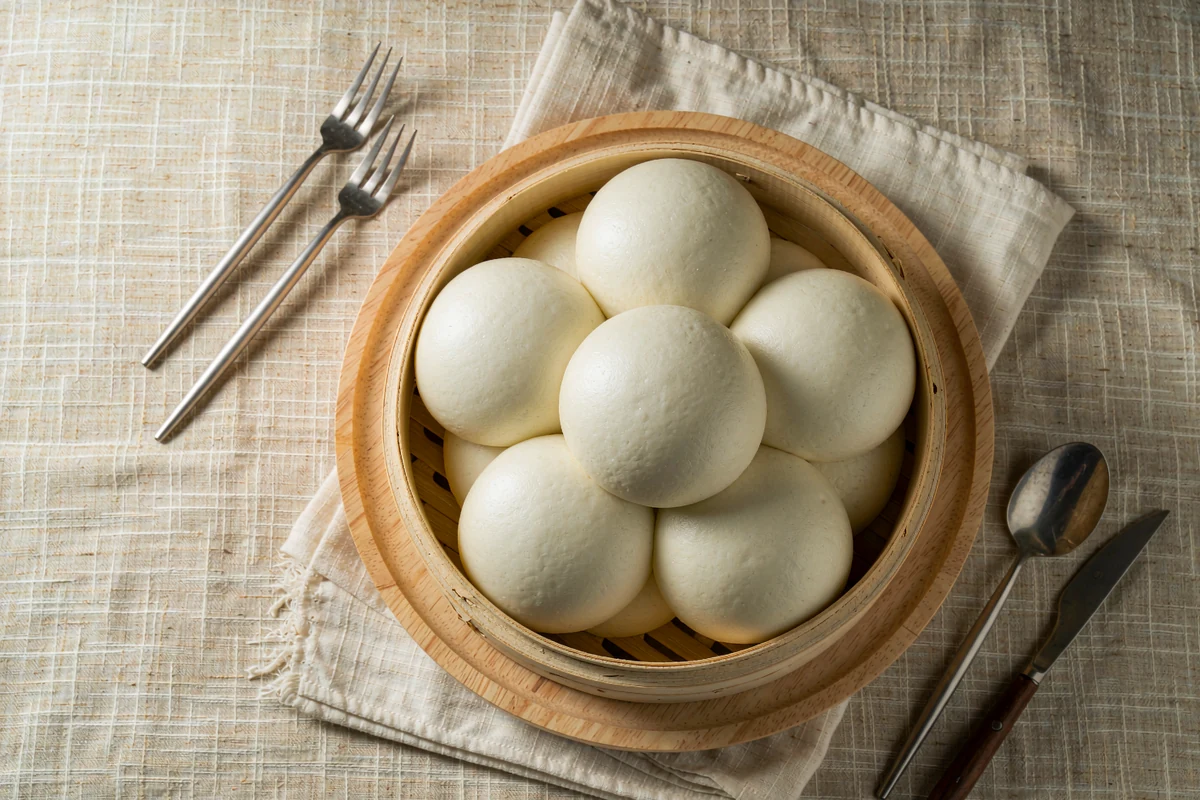
Set the rosettes on oiled parchment 6 cm apart and proof at 28 C for 20 minutes until they look airy rather than dense. Steam over boiling water at medium heat for 12 minutes, then rest 4 minutes with the lid on before lifting.
Tips that matter
- Slice the log with a sharp knife in one clean downward motion; sawing smears the scallion paste and glues the layers together so the petals cannot open.
- If the rolls unwind during proofing, the seam was not pinched firmly or the log was rolled too loosely; chill the log 10 minutes before slicing to firm it.
Easy variations
- Add 1 tsp ground Sichuan pepper to the hot oil for a numbing, fragrant version that still shows the green scallion layers.
- Swap half the scallions for 40 g finely chopped coriander leaves and 1 tbsp toasted sesame seeds for a brighter, nuttier spiral.
Questions that come up
My flower rolls came out as plain spirals with no petals. Why?
The cut edges were facing down or the chopstick press was too shallow. Stack the pieces cut-side up and press until the layers visibly separate, then tuck both ends underneath so the shape is locked before proofing.
Can I assemble these ahead and steam them later?
Yes, but proof only once. Shape the rolls, cover and refrigerate for up to 8 hours, then steam straight from the fridge, adding 2 minutes. A full second proof at room temperature makes them collapse.
Nutrition, roughly
| Energy | 320 kcal |
|---|---|
| Protein | 8 g |
| Carbohydrate | 48 g |
| Fat | 11 g |
Estimated per serving from standard ingredients, rounded. Treat it as a guide, not clinical data.
Flour, Water and Rest: Working with Wheat Dough
The three states of a simple dough, how hydration changes them, and why resting time is an ingredient rather than a pause.