Dumplings & Steamed Buns · Chinese home cooking
Pork and Cabbage Dumplings
Hand-rolled wheat wrappers hold a salted pork and cabbage filling that releases its own juices; a rolling boil sets the skins while the centres stay firm and faintly peppery.
About this dish
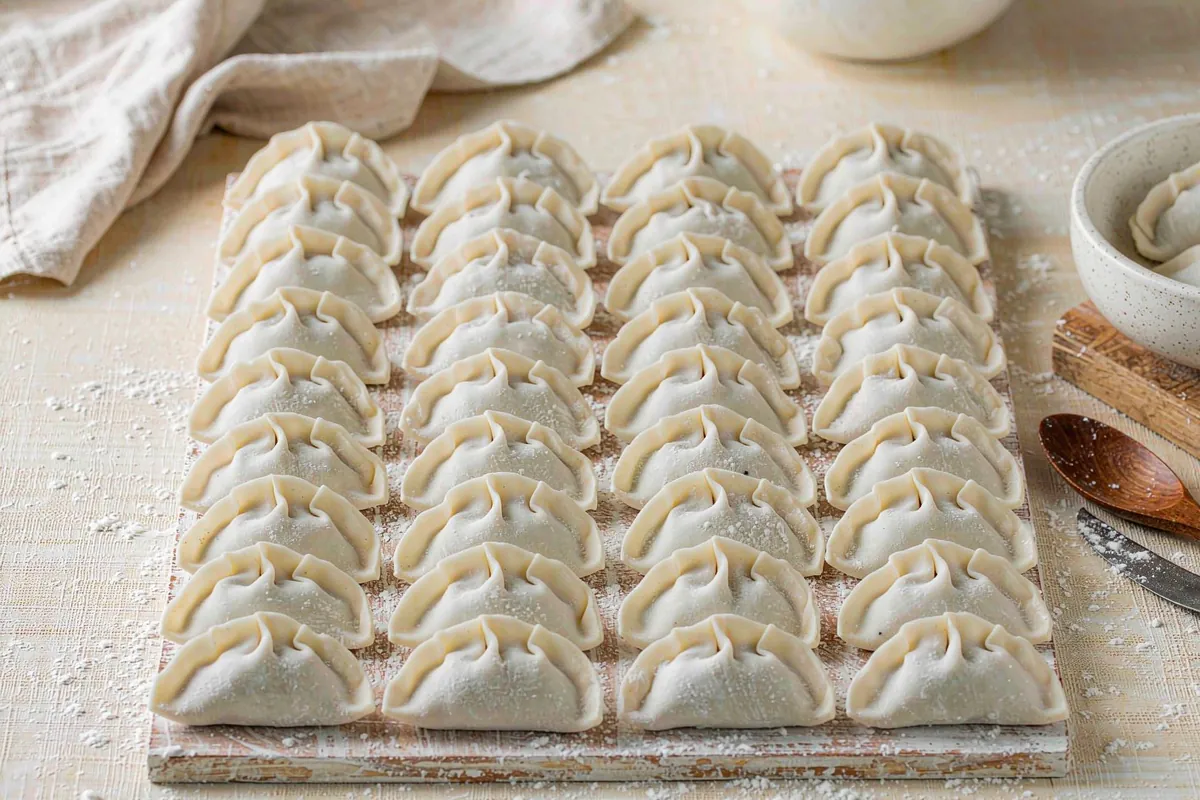
Salt is the whole story here. Grated cabbage holds a surprising amount of water; skip squeezing and the filling turns to soup before the pleats close. I salt it, let it weep 10 minutes, then wring it in a cloth with a soft creak until the shreds feel dry. Ginger water hits the pork with a sharp, clean smell; stirred one way it turns glossy and tacky. On the board the dumplings sit in neat rows, pleated one side, smooth the other, pale with flour.
Before you start
Equipment: Pot. Tap the ingredient checkboxes as you go.
Method
7 steps · tick each one off as you finish it.
Mix and rest the dough
Stir the warm water and salt into the flour until a rough mass forms, about 2 minutes. Knead 5 minutes, cover with a damp cloth and rest 30 minutes; the dough should feel supple and hold a rolled shape without springing back.
Salt and squeeze the cabbage
Toss the cabbage with the 1 tbsp salt and leave 10 minutes until it slumps and pools liquid. Wring it hard in a clean cloth until only a few drops come out; the shreds should look limp and feel dry, never wet.
Build the filling
Combine the pork, soy sauce, sesame oil and scallions. Stir in one direction only, adding the ginger water 20 ml at a time for 3 minutes until the meat looks glossy and pulls from the bowl in one sticky mass. Fold in the cabbage.
Roll the wrappers
Knead the dough 1 minute, divide into 4 logs and cut each into 10 pieces of about 15 g. Roll each into a 9 cm round, 1.5 mm at the rim and thicker at the centre, using the reserved 50 g flour for dusting.
Pleat and seal
Hold a wrapper in the palm, set 20 g filling off-centre and damp the rim. Fold into a half-moon, pinch the top centre, then make 4 pleats along the front edge only, pressing each against the flat back so the dumpling stands upright.
Boil
Bring 3 litres of salted water to a full rolling boil. Lower 10 dumplings in, stir once to stop sticking, and each time the water returns to a boil add 120 ml cold water; do this three times in total, about 6 minutes.
Check and serve
Lift one out: the wrapper should look translucent at the pleats, feel firm but not stiff, and the filling should spring back when pressed. Drain and serve 10 per person with black vinegar and chilli oil, keeping the rest in a single layer.
Tips that matter
- Roll wrappers thinner at the edge than the centre; a thick rim stays doughy after boiling while the pleats, where the dough is doubled, need the extra thinness to cook through.
- Freeze shaped dumplings on a floured tray for 1 hour before bagging; boiled from frozen they need one extra cold-water addition, about 2 minutes longer.
Easy variations
- Replace 200 g of the cabbage with 200 g grated zucchini, salted and squeezed the same way, for a lighter, sweeter filling.
- Pan-fry the boiled dumplings in 1 tbsp oil over medium heat for 2 minutes per side for a crisp-bottomed version.
Questions that come up
Why do my dumplings burst open in the pot?
Usually too much filling, an undamped rim, or a violent boil. Use 20 g filling, wet the edge, and keep the water at a lively but not turbulent boil; the cold-water additions stop it from thrashing the pleats apart.
Can I use shop-bought wrappers?
Yes, but they are thinner and drier. Brush the rim generously with water, use 15 g filling rather than 20 g, and boil for about 4 minutes instead of 6, checking after the second cold-water addition.
Nutrition, roughly
| Energy | 520 kcal |
|---|---|
| Protein | 28 g |
| Carbohydrate | 62 g |
| Fat | 18 g |
Estimated per serving from standard ingredients, rounded. Treat it as a guide, not clinical data.
Flour, Water and Rest: Working with Wheat Dough
The three states of a simple dough, how hydration changes them, and why resting time is an ingredient rather than a pause.