Pasta & Italian Rice · Mediterranean home cooking
Rice Pilaf with Peas and Lemon
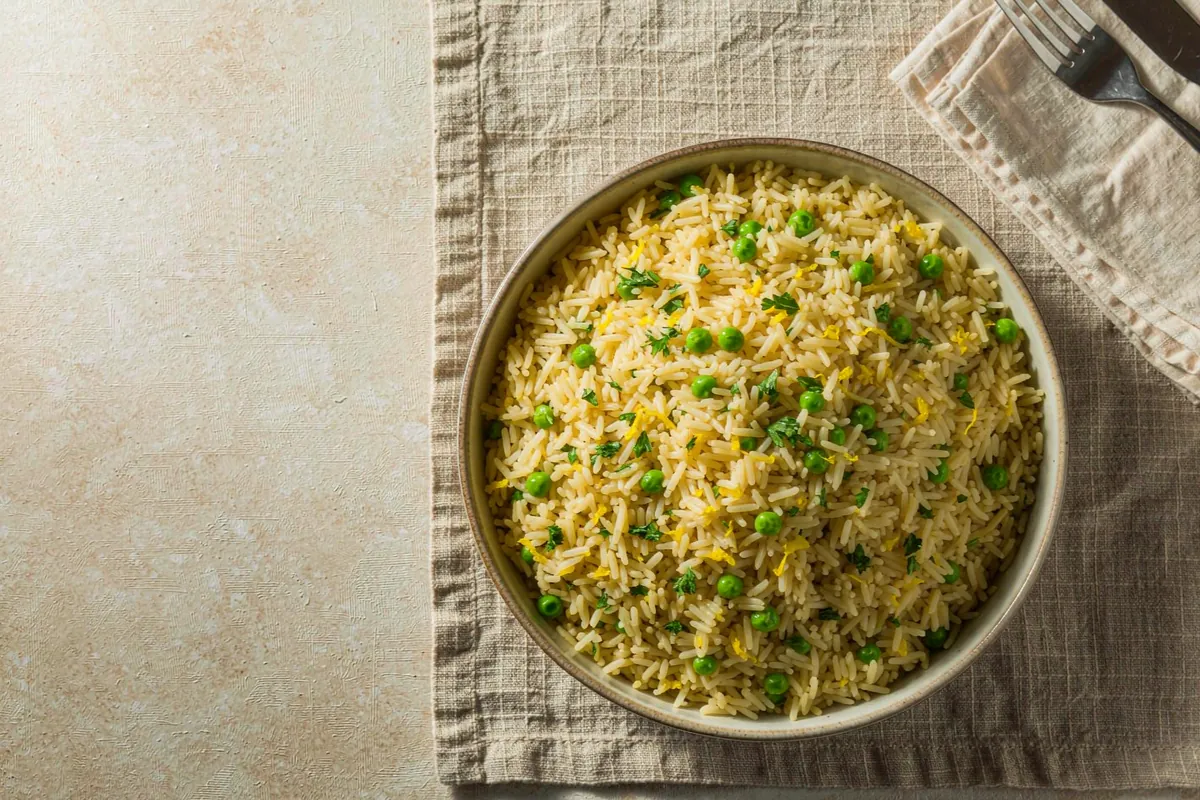
Long-grain rice is toasted in oil with onion, then simmered in stock so each grain stays separate, brightened at the end with peas, lemon zest and chopped parsley.
About this dish
Pilaf is built on one small step that changes everything: toasting dry rice in hot oil before any liquid goes in. The grains turn from chalky white to pale gold at the edges and give off a nutty, almost popcorn-like smell. Add onion and stock, then leave the pan alone so trapped steam, not stirring, does the work. When the lid comes off the surface should be pocked with little holes and the grains should lift apart easily with a fork, never clump.
Before you start
Equipment: Pot. Tap the ingredient checkboxes as you go.
Method
7 steps · tick each one off as you finish it.
Rinse the rice
Put 300 g basmati rice in a sieve, rinse under cold water and swirl until it runs clear, not milky, about 3 changes. Let it drain 5 minutes and feel the grains: they should squeak faintly and no longer feel dusty to the fingertips.
Soften the onion
Warm 2 tbsp oil in a heavy pot over medium heat, add 100 g diced onion and cook 5 minutes, stirring often. Wait until the pieces turn soft and translucent with a sweet smell and no sharp raw bite on tasting.
Toast the rice
Add the drained rice and stir over medium heat for 3 minutes. The moment to move on is when the grains shift from chalky white to pale gold and give off a nutty, popcorn-like smell; you should hear a dry rustle as they turn in the oil.
Add stock and peas
Pour in 600 ml hot stock and 1 tsp salt, scrape the pot bottom, and bring to a boil over high heat, about 2 minutes. Scatter 150 g peas over the surface without stirring; the liquid should just cover the rice by a finger's width.
Simmer covered
Clamp on a lid, drop the heat to low and simmer untouched for 15 minutes. Ready once the lid is faintly fogged, no steam whistles from the rim and the surface shows small craters; resist lifting the lid before the time is up.
Rest off the heat
Take the pot off the heat and rest, still covered, for 10 minutes. Move on when the hissing has stopped and the lid lifts without a rush of wet steam; the grains at the edge should look dry and separate, never clumped.
Fluff and finish
Add 1 tbsp butter, 1 tsp lemon zest, 2 tbsp lemon juice and 15 g parsley, then fluff with a fork for 30 seconds. It has had enough when the grains fall apart lightly, the peas stay bright green and the whole pot smells citrusy.
Tips that matter
- Rinse until the water runs clear; the loose surface starch on unwashed basmati is what makes pilaf clump instead of staying in separate grains.
- Resist stirring after the stock goes in. Lifting the lid or folding the rice releases steam and turns the grains gummy rather than fluffy.
Easy variations
- Toast 1 tsp cumin seeds and 2 crushed cardamom pods in the oil with the onion for a warmer, spiced pilaf.
- Stir 80 g toasted flaked almonds and 60 g golden raisins into the finished rice for a festive version.
Questions that come up
Why is my pilaf sticky instead of fluffy?
Either the rice was not rinsed, the liquid ratio was too high, or you stirred it while it cooked. Rinse until clear, use 600 ml stock to 300 g rice, and leave the lid on for the full 15 minutes.
Can I use long-grain rice other than basmati?
Yes, ordinary long-grain white rice works with the same 600 ml stock, though the grains will be less fragrant and slightly softer; reduce the simmer by 2 minutes if your brand cooks fast.
Nutrition, roughly
| Energy | 390 kcal |
|---|---|
| Protein | 9 g |
| Carbohydrate | 66 g |
| Fat | 10 g |
Estimated per serving from standard ingredients, rounded. Treat it as a guide, not clinical data.
Boiling Noodles and Pasta Well
Salt, water volume, the two-minute window and the starchy cooking liquid that most home cooks pour down the sink.