Pasta & Italian Rice · Italian home cooking
Spaghetti alla Carbonara
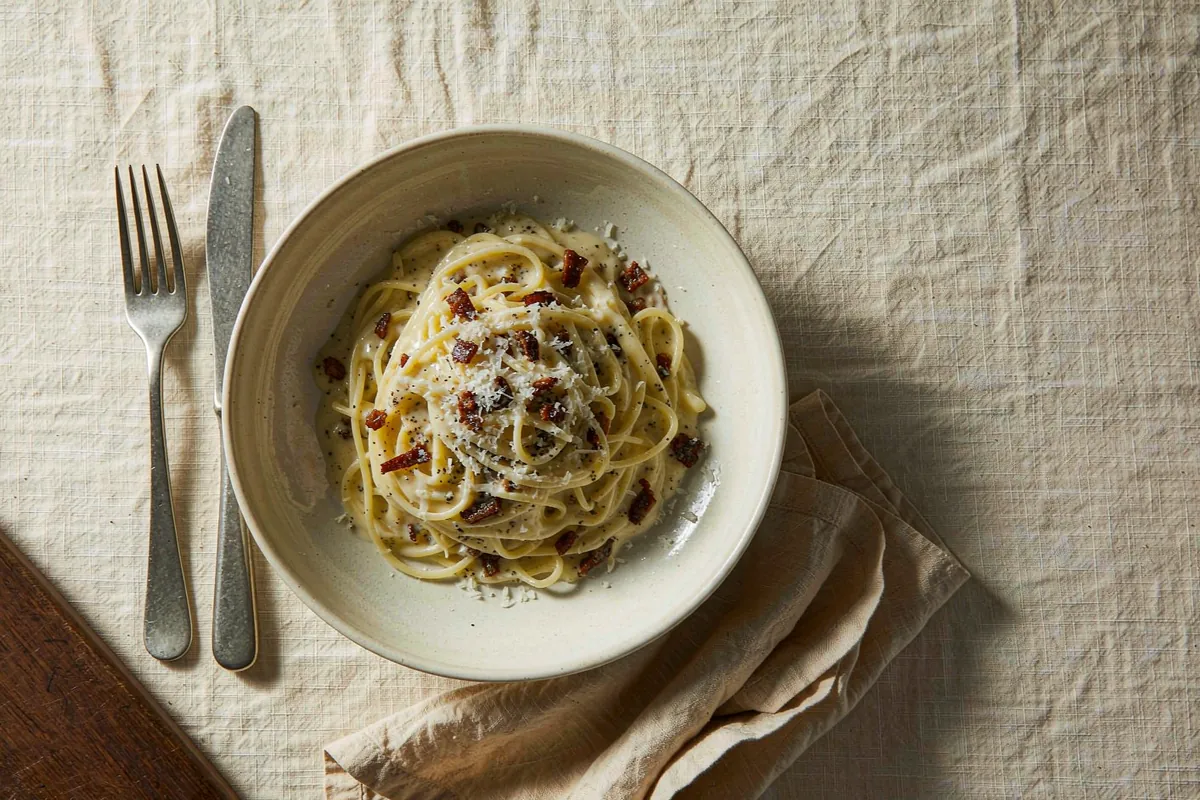
Guanciale renders into crisp bits, then egg yolk and pecorino are tossed off the heat into a glossy sauce that coats each strand without a drop of cream.
About this dish
Carbonara is a lesson in residual heat. The only real cooking happens when the cured pork renders and the pasta boils; the rest is timing. Take the pan off the flame before the eggs go in, because direct heat scrambles them into grainy curds instead of a smooth sauce. What you want is a glossy, pale-gold coating that slides slowly off a lifted strand. Work quickly and you will smell the pepper bloom and hear the faint hush of steam as the cheese melts into the starchy water.
Before you start
Equipment: Pot, Skillet. Tap the ingredient checkboxes as you go.
Method
7 steps · tick each one off as you finish it.
Boil the water
Bring 4 litres of water with 1 tsp coarse salt to a rolling boil over high heat, about 8 minutes. It is done when the bubbles are large and constant and a pinch of salt dissolves instantly on the surface without sinking.
Render the guanciale
Set a cold wide skillet over medium-low heat with 1 tbsp oil, add 150 g guanciale strips and cook 8 minutes, stirring now and then. Wait until the fat turns translucent, the edges crisp and a rich, salty smell fills the kitchen.
Whisk the eggs and cheese
In a bowl, beat 220 g egg with 80 g pecorino and 1 tsp cracked pepper for 30 seconds into a thick, grainy, pale-straw paste. It should fall from a spoon in a slow ribbon, not run off in a thin stream.
Cook the spaghetti
Boil 400 g spaghetti for 1 minute short of the packet time, about 9 minutes, at a hard boil. The moment to move on is when a strand bends without snapping but still shows a faint white dot of firm core when you bite into it.
Save water and cool the pan
Reserve 60 ml of the starchy water, then drain the pasta. Take the skillet of guanciale off the flame and let it cool for 60 seconds; the sizzling should quiet to a soft tick and no visible heat shimmer should rise from the fat.
Toss off the heat
Add the spaghetti to the skillet, toss in the fat, then pour in the egg mixture and 30 ml pasta water, stirring hard off the heat for 45 seconds. Ready once a glossy pale-gold film coats each strand with no raw egg pooling.
Adjust and serve
If the sauce looks tight, loosen it with the last 30 ml pasta water, a spoonful at a time, tossing 15 seconds. Plate at once in warm bowls, finish with extra pecorino and pepper, and serve while the strands still steam and slide.
Tips that matter
- Take the pan fully off the flame before the eggs go in; even a residual hot burner will scramble the sauce into little curds.
- Grate the pecorino on the fine side of the grater so it dissolves into the egg instead of staying in gritty threads.
Easy variations
- Swap guanciale for 150 g smoked pancetta and add 1/2 tsp smoked paprika for a deeper, woodier note.
- For a richer version, use 4 egg yolks and 1 whole egg instead of the mixture, and cut the pasta water to 30 ml.
Questions that come up
Why did my carbonara turn into scrambled eggs?
The pan was too hot when the egg went in. Cool the rendered fat off the heat for a full minute, toss the pasta in it first, and add the egg mixture with a splash of pasta water while stirring constantly.
Is cream ever needed in carbonara?
No. The emulsion of egg yolk, cheese, rendered pork fat and starchy water makes a creamy sauce on its own; cream only dulls the sharp pecorino flavour and makes the dish heavy.
Nutrition, roughly
| Energy | 620 kcal |
|---|---|
| Protein | 26 g |
| Carbohydrate | 68 g |
| Fat | 26 g |
Estimated per serving from standard ingredients, rounded. Treat it as a guide, not clinical data.
Boiling Noodles and Pasta Well
Salt, water volume, the two-minute window and the starchy cooking liquid that most home cooks pour down the sink.