Pasta & Italian Rice · Italian home cooking
Basil Pesto Pasta
Basil, pine nuts, garlic and hard cheese are pounded into a coarse green paste, then loosened with pasta water so every ribbon of pasta stays coated and fragrant.
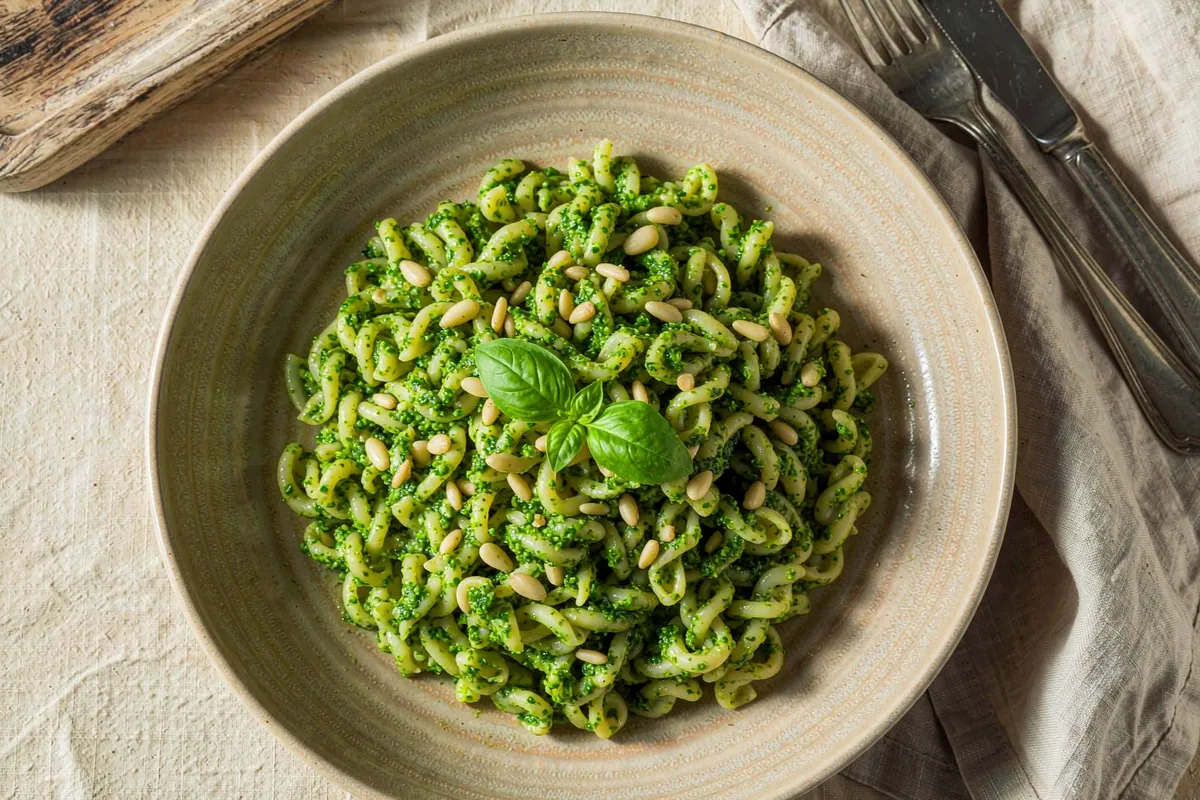
About this dish
Pesto is made by bruising, not cooking. A blender or mortar crushes basil against garlic and coarse salt; you hear the dry rasp of the blades and smell a sharp green perfume rising from the bowl. No heat touches the sauce, so its colour stays a vivid, grassy green instead of dulling to olive. The final trick is texture: loosen the thick paste with a splash of hot pasta water until it pours in a slow ribbon and clings to every piece of pasta.
Before you start
Equipment: Pot, Blender. Tap the ingredient checkboxes as you go.
Method
7 steps · tick each one off as you finish it.
Toast the pine nuts
Put 30 g pine nuts in a dry skillet over medium-low heat and shake for 3 minutes. They are done when they turn light gold at the edges and give off a warm, buttery smell; pull them off at once because they scorch in seconds.
Blend the pesto
In a blender, combine 60 g basil, 15 g garlic, the cooled nuts, 50 g cheese and 1/2 tsp salt, then pulse 6 times while drizzling in 80 ml olive oil over 30 seconds. Stop when a coarse, vivid green paste clings to the blades.
Boil the water
Set 4 litres of water with 1 tsp coarse salt over full heat and allow roughly 8 minutes for a hard, uninterrupted boil. You will know it has arrived when big bubbles break across the entire surface and a wooden spoon dipped in comes back sheathed in foam.
Cook the pasta
Boil 400 g trofie or fusilli for the packet time minus 1 minute, about 10 minutes, at a lively boil. Move on when a piece is tender at the ridges but offers a faint firm bite at its core when pressed.
Reserve the water
Scoop out 80 ml of the cooking water before draining; it should look cloudy and feel faintly thick when rubbed between thumb and finger. Set the drained pasta aside for 1 minute so its surface stops steaming hard and the pesto will not split.
Loosen and coat
Scrape pesto into a warm bowl, whisk in 40 ml pasta water for 15 seconds until it runs in a slow ribbon, then fold in the pasta for 30 seconds. It has had enough when every piece wears an even green coat with no dry spots.
Adjust and serve
If the bowl looks stiff, add the last 40 ml water a spoonful at a time, folding 10 seconds. Serve in shallow bowls topped with basil leaves, while the green stays bright and the garlic smell rises warm from the plate.
Tips that matter
- Add the olive oil in a slow stream while the blades run; dumping it in at once leaves the basil bruised and the paste loose rather than emulsified.
- Never heat the pesto in a pan. Warm the serving bowl and let the hot pasta and its water melt the sauce gently, which keeps the green bright.
Easy variations
- Replace half the basil with 30 g baby spinach for a milder, sweeter sauce that stays green for longer in the fridge.
- Stir 150 g halved cherry tomatoes and 80 g torn mozzarella into the finished pasta for a summer plate.
Questions that come up
Why did my pesto turn dark olive-green?
Heat or too much air oxidised the basil. Keep the sauce away from direct heat, blend it briefly rather than for minutes, and loosen it with hot pasta water only at the moment of serving.
Can I make pesto ahead?
Yes. Press a sheet of cling film onto the surface of the paste and refrigerate for up to 3 days; it will darken slightly at the top but the flavour stays fresh once stirred.
Nutrition, roughly
| Energy | 540 kcal |
|---|---|
| Protein | 17 g |
| Carbohydrate | 62 g |
| Fat | 26 g |
Estimated per serving from standard ingredients, rounded. Treat it as a guide, not clinical data.
Boiling Noodles and Pasta Well
Salt, water volume, the two-minute window and the starchy cooking liquid that most home cooks pour down the sink.