Noodles East · Chinese home cooking
Weeknight Chow Mein
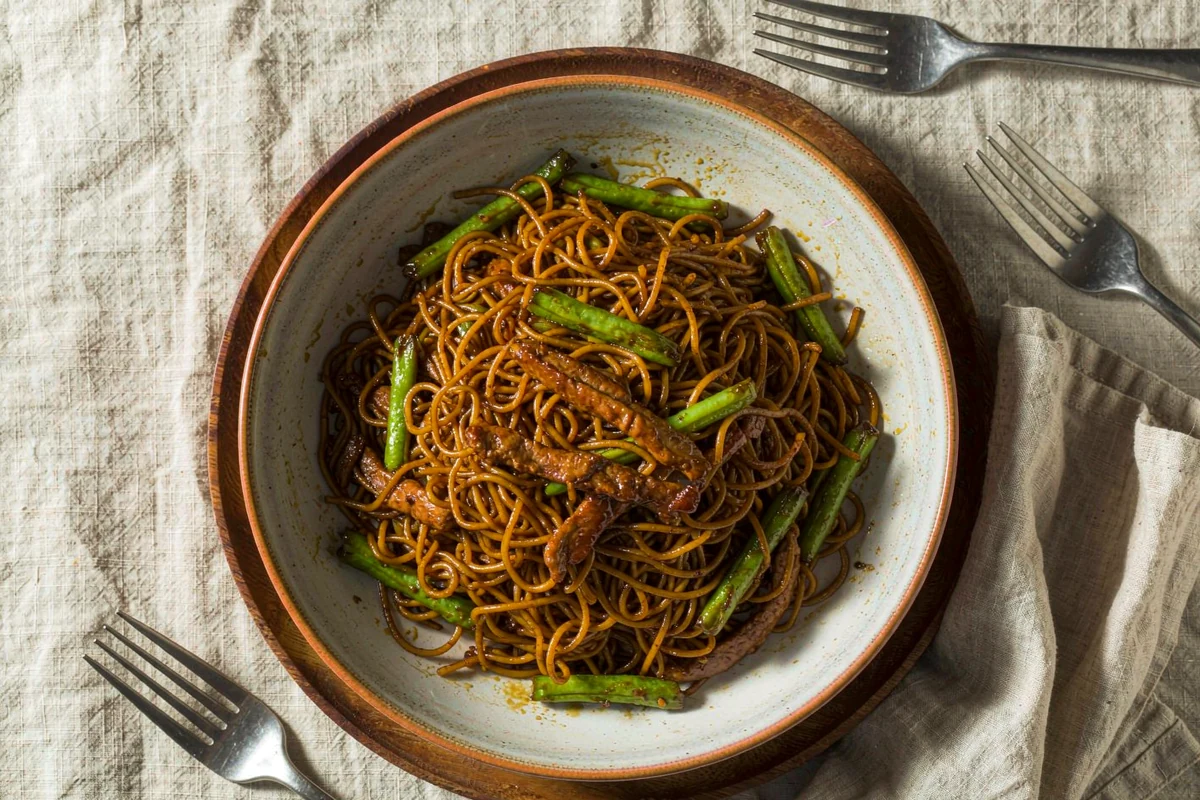
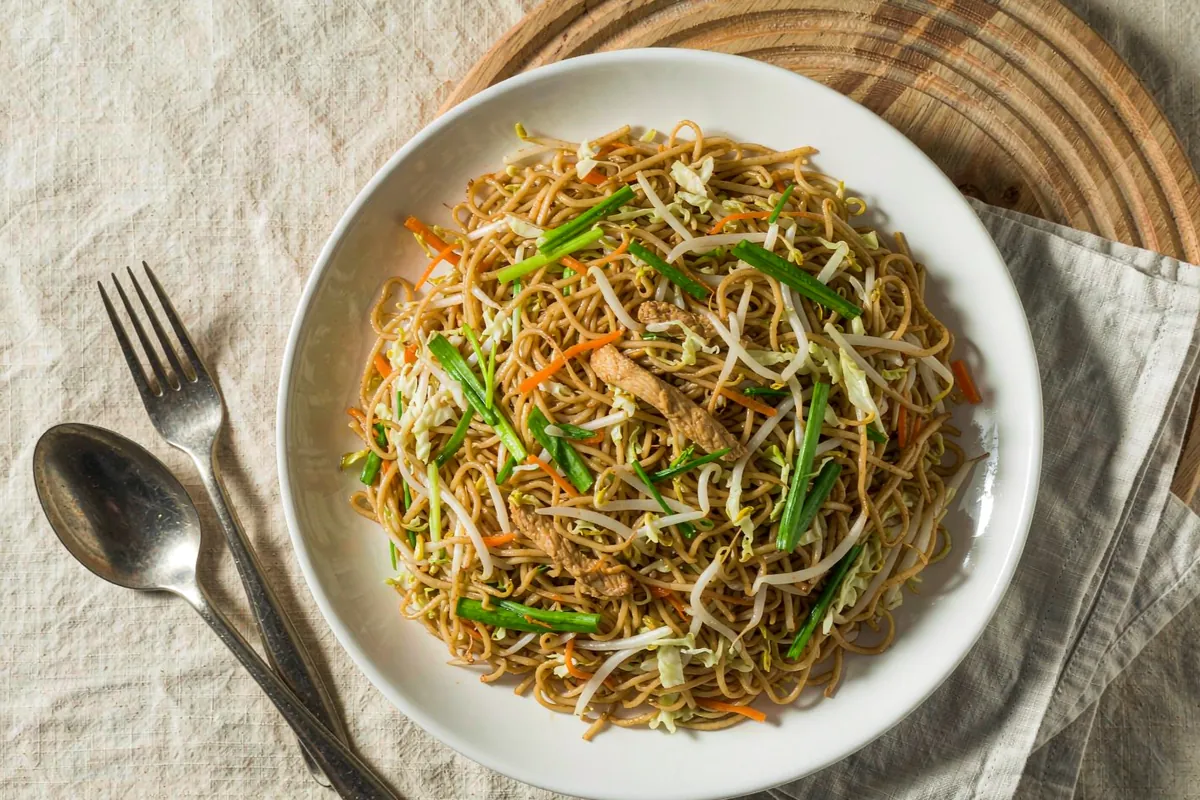
Egg noodles stir-fried in a hot wok with shredded chicken, cabbage and carrot until the edges catch a little brown, all coated in a light soy and oyster sauce glaze.
About this dish
Chow mein is won or lost before the wok is hot. Parboil the noodles until just short of tender, drain them hard and spread them out; wet noodles steam and clump instead of frying. Cut everything else into thin strips so it cooks in the same two minutes. Work in batches if your pan is small, because a crowded wok drops in temperature and you end up braising, not searing. You want a dry, faintly smoky smell, a few brown edges on the noodles, and vegetables that still crunch.
Before you start
Equipment: Wok. Tap the ingredient checkboxes as you go.
Method
7 steps · tick each one off as you finish it.
Marinate and mix sauce
Toss the chicken strips with 1 tbsp soy sauce and the cornstarch for 20 seconds, then leave 10 minutes. Whisk the soy, oyster sauce, Shaoxing wine, sesame oil, sugar, white pepper and 3 tbsp water in a small bowl until smooth.
Parboil the noodles
Boil 2 litres water and cook fresh noodles 2 minutes, dried 4 minutes, until bendy but still a shade underdone; a strand should have a faint white thread at the core. Drain, rinse briefly with cold water and shake very dry.
Dry the noodles
Spread the noodles on a clean tray in a single layer and leave 5 minutes, tossing once with 1 tsp oil. They should feel dry and slippery, not tacky; any surface water left now will turn the wok into a steamer.
Sear the chicken
Warm 1 tbsp oil in the wok over full heat for about 90 seconds, until the surface ripples and gleams. Add the chicken in one layer and leave 90 seconds without stirring, then toss 60 seconds until the strips are opaque with a few brown edges. Lift out.
Fry the vegetables
Add the remaining 1 tbsp oil, then garlic, onion and carrot. Stir 90 seconds until the onion softens at the edges. Add the cabbage and toss 60 seconds more; it should wilt slightly but still hold its shape and make a dry rustling sound.
Fry the noodles
Add the noodles, spread them across the wok and leave 45 seconds untouched so the bottom layer catches a little brown. Fold them over, flatten again and do that two more times, roughly 2 minutes in all; the strands should turn dry, loose and lightly scented with smoke.
Glaze and serve
Pour the sauce around the hot rim of the wok so it sizzles, then toss 45 seconds. Return the chicken, add bean sprouts and scallions, and fold 5 times. The noodles should look lightly glazed, never wet, with the sprouts still crisp.
Tips that matter
- A domestic hob cannot hold restaurant heat. If your wok is under 30 cm, fry the noodles in two batches and combine at the glazing stage.
- Fresh egg noodles give the best chew, but dried ones work; undercook them by a minute and dry them well, since they keep softening in the wok.
Easy variations
- Replace the chicken with 200 g firm tofu strips, pressed dry and browned hard first, and use mushroom oyster sauce.
- Add 100 g sliced shiitakes with the onion and finish with 1 tsp chilli crisp folded in off the heat.
Questions that come up
Why are my noodles sticky and breaking apart?
They were overcooked in the water or went into the wok wet. Parboil them a shade under, drain hard, spread them out for 5 minutes and use a very hot wide pan.
Can I make chow mein without a wok?
Yes, use a 28 cm carbon-steel or cast-iron skillet on the highest heat. Cook in two batches and give the noodles 45 seconds of undisturbed contact between tosses.
Nutrition, roughly
| Energy | 590 kcal |
|---|---|
| Protein | 30 g |
| Carbohydrate | 74 g |
| Fat | 19 g |
Estimated per serving from standard ingredients, rounded. Treat it as a guide, not clinical data.
Boiling Noodles and Pasta Well
Salt, water volume, the two-minute window and the starchy cooking liquid that most home cooks pour down the sink.