Technique note · Foundation · 6 min read
Boiling Noodles and Pasta Well
Salt, water volume, the two-minute window and the starchy cooking liquid that most home cooks pour down the sink.
Technique note · Foundation · 6 min read
Salt, water volume, the two-minute window and the starchy cooking liquid that most home cooks pour down the sink.
A large pot holds its boil when cold noodles go in, which matters for fresh wheat noodles that shed starch. For dried pasta, slightly less water is useful: the cooking liquid ends up more concentrated in starch and makes a better sauce. Either way, salt the water once it is boiling, roughly 10 g per litre, and add the noodles in loose handfuls so they do not weld together.
Stir within the first thirty seconds. That is when the surface starch is sticky and the strands are most likely to fuse. After that, leave them alone apart from an occasional lift with tongs.
Noodles continue to cook after they leave the water. A strand that is exactly right in the colander will be soft by the time it reaches the table. Pull it slightly early, and finish the last minute of cooking in the sauce or hot broth with a splash of the reserved water. This is also how a thin tomato sauce turns glossy and clings instead of pooling.
For cold noodle dishes, the opposite applies: rinse under cold running water until the strand feels firm and cool, drain hard, then toss with a little oil so the surface does not glue together while you slice the cucumber.
Oil in the cooking water does almost nothing for the noodles and makes the surface slippery, so sauce slides off. Save the oil for the pan. If a sauce looks broken or greasy, take it off the heat, add two tablespoons of starchy water and stir hard; the emulsion usually comes back in seconds.
Bite a strand: the centre should offer a slight, even resistance and a faint pale line when you look at the cut end. If it is chalky, keep going; if it is uniformly soft, you have passed it.
Only for a cold salad. Rinsing removes the surface starch that helps sauce cling, so for hot dishes drain and sauce immediately instead.
Put it into practice
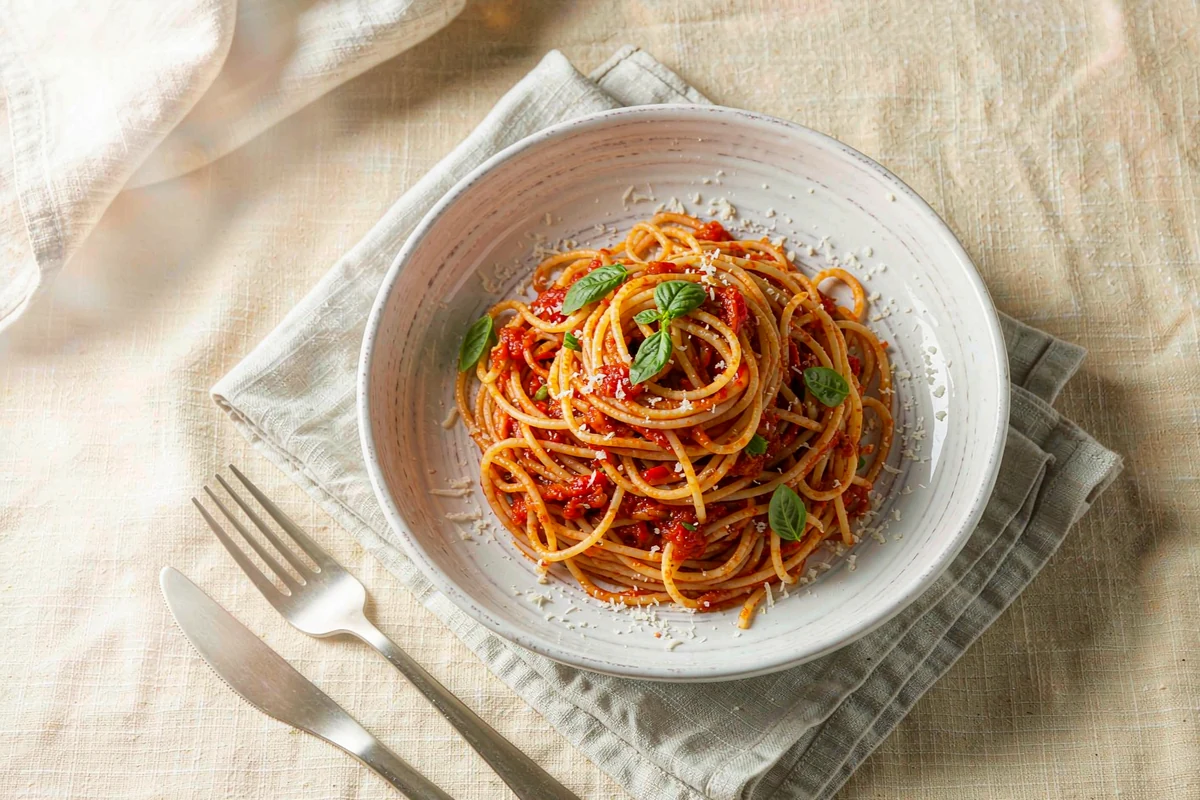
Ripe plum tomatoes, garlic and a short simmer make a bright sauce that clings to spaghetti, finished with torn basil and a little starchy pasta water for a silky coat.
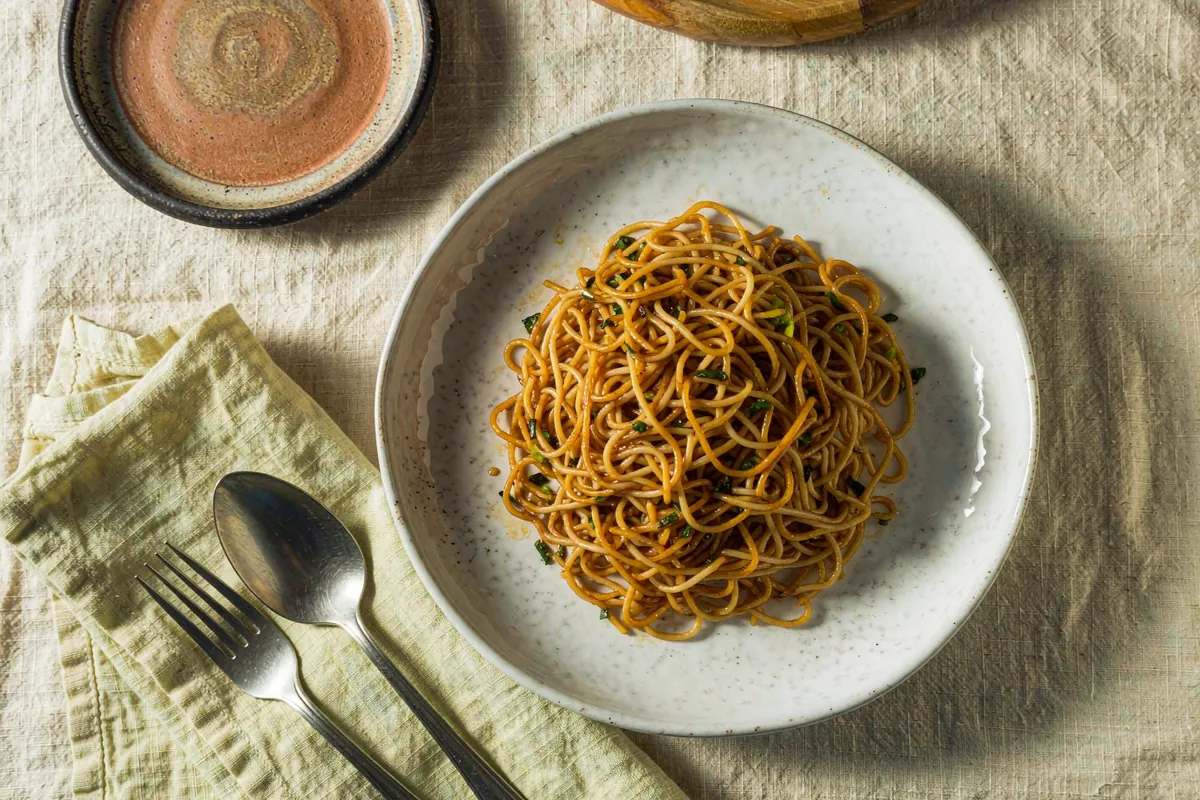
Wheat noodles tossed with slowly fried scallions, their amber oil and a soy-sugar glaze, finished with crisp dark green scallion threads and a sharp, savoury smell.
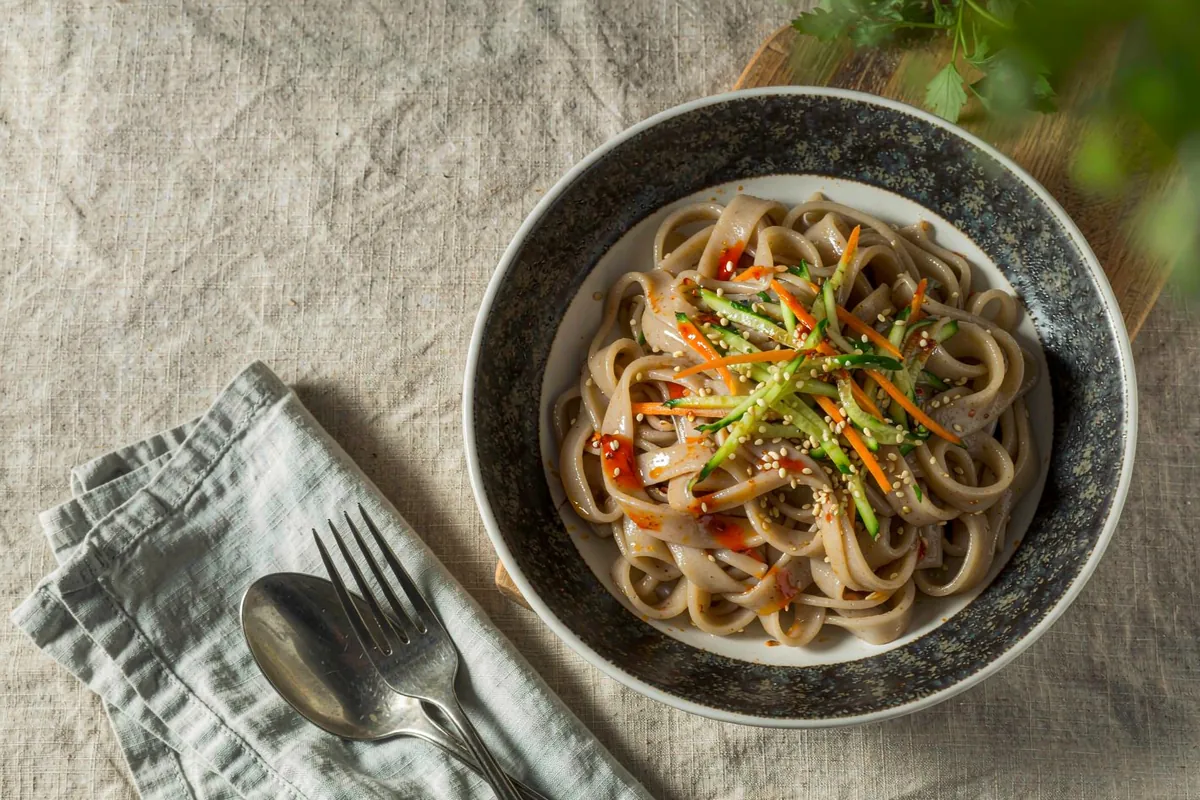
Chilled wheat noodles coated in a thin, tangy sesame-soy dressing with garlic and chilli oil, topped with crisp cucumber and carrot strips for a cool, chewy bowl.
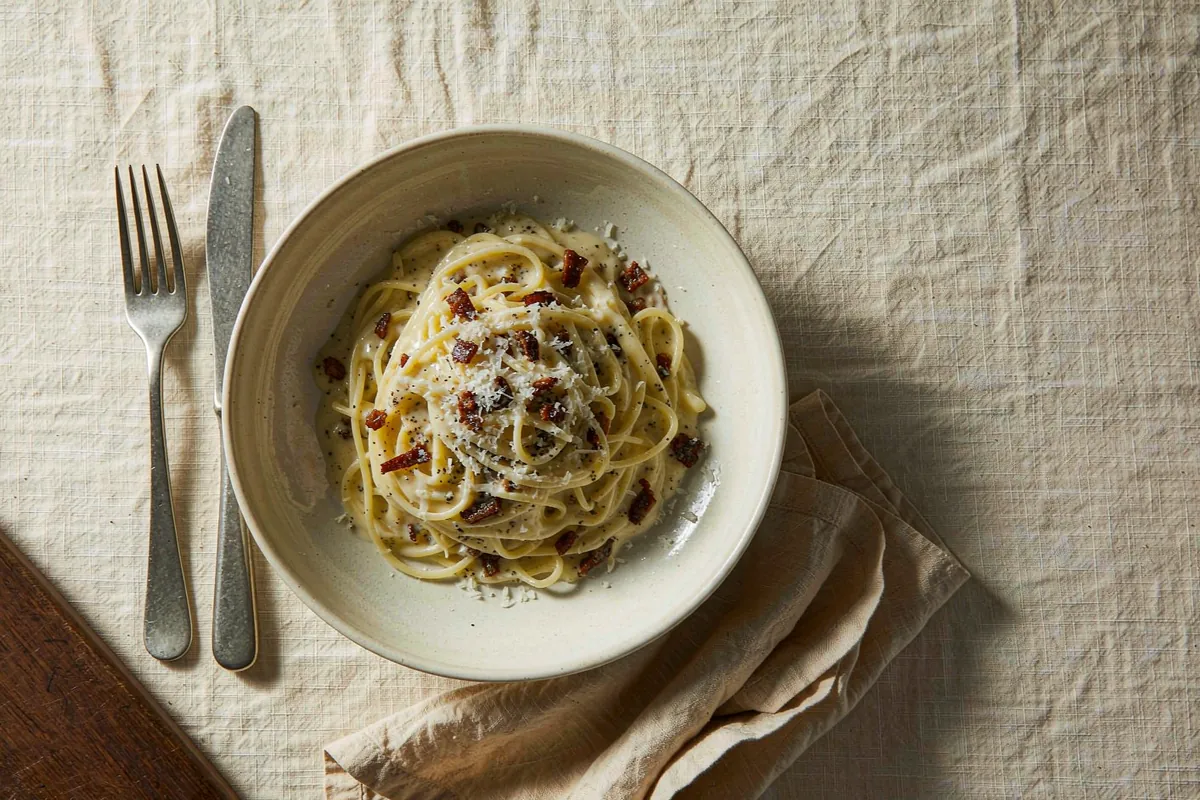
Guanciale renders into crisp bits, then egg yolk and pecorino are tossed off the heat into a glossy sauce that coats each strand without a drop of cream.