Congee, Porridge & Oats · Chinese home cooking
Shiitake Carrot and Chicken Congee
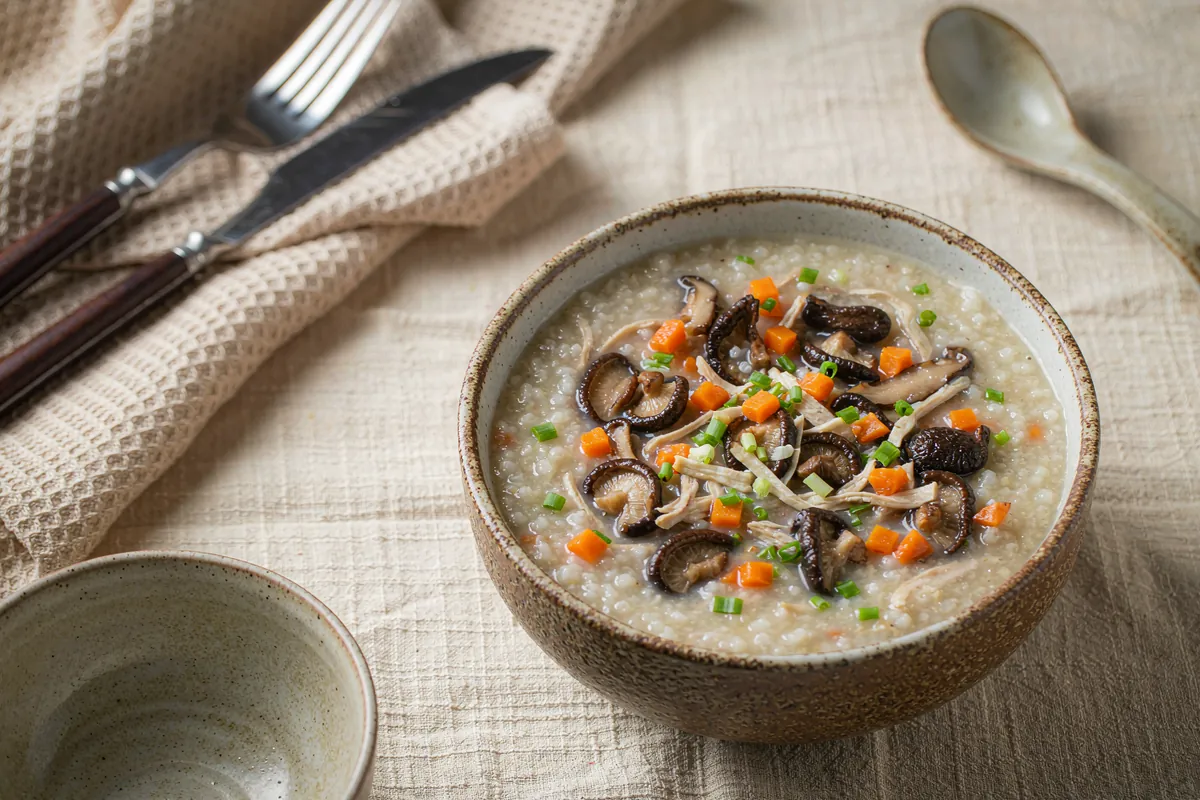
Dried shiitake gives the rice broth a deep, woodsy base while carrot softens into sweetness; poached chicken shreds are folded in at the end so the meat stays tender rather than turning stringy.
About this dish
The soaking liquid from dried shiitake is the point here; pouring it away leaves plain rice and a few mushrooms. Strain it through a cloth to catch grit, then cook the rice in it. Its smell as it heats is damp and forest-like, unlike the bright ginger note that follows. Carrot goes in midway so it softens but keeps its orange. Poach the chicken in the same pot and pull it into shreds, which stops the meat shedding into the porridge. A spoon dragged through the bowl sounds thick.
Before you start
Equipment: Pot. Tap the ingredient checkboxes as you go.
Method
7 steps · tick each one off as you finish it.
Prepare the mushrooms
With the heat off, lift 30 g soaked shiitake from their liquid, squeeze them and slice the caps thin for 3 minutes. You will know the soaking liquid is ready to use when it has been strained and shows no grit at the bottom.
Build the broth
Set a pot over medium heat with 1 tbsp oil and 12 g ginger for 60 seconds, then pour in 1400 ml water and the shiitake liquid. Call it done when the ginger smells sharp and the first small bubbles appear.
Cook the rice
Add 200 g rice and 30 g sliced shiitake, raise the heat to high for 10 minutes, then drop it to low for 25 minutes. You will know it is right when the grains have burst and the broth has turned a light brown.
Add carrot
Stir in 150 g diced carrot and 1 tsp salt, keeping the heat low for 10 minutes. This is the point to stop: a cube crushes easily against the pot and the orange has begun to stain the surrounding broth.
Poach the chicken
Lower in 250 g chicken thigh and keep the heat at a bare simmer for 12 minutes, skimming once. Look for this: the surface looks uniformly pale and a skewer meets no resistance at the thickest point.
Shred and season
Lift the chicken out, rest it off the heat for 3 minutes, then pull it into shreds and return it with 1 tbsp soy sauce and 1/2 tsp white pepper. The cue is simple: the shreds look glossy and the broth has darkened slightly.
Finish
Fold in 70 g scallion whites off the heat for 30 seconds, rest 2 minutes, then serve with the greens scattered on top. It is right when the whites have lost their raw bite and the greens stay crisp.
Tips that matter
- Save every drop of the shiitake soaking liquid but strain it twice; the sediment at the bottom is gritty and will spoil an otherwise smooth porridge.
- Thigh stays moist through a 12-minute poach; breast dries out, so if you use it, cut the poaching time to 8 minutes.
Easy variations
- Add 60 g sliced fresh shiitake with the carrot for a meatier texture, but keep the dried ones for the broth.
- Stir 1 tsp of toasted sesame oil in off the heat and finish with 1 tbsp fried shallots instead of raw scallion.
Questions that come up
Why does my congee taste flat?
Usually the mushroom liquid was discarded or the salt went in too late. Use the strained soaking water as part of the 1400 ml, and season with the full 1 tsp salt before the carrot goes in.
Can I shred raw chicken straight into the pot?
You can, but it sheds fibres into the broth. Poaching the whole piece first and pulling it apart keeps the shreds distinct; add them only after the heat is off.
Nutrition, roughly
| Energy | 320 kcal |
|---|---|
| Protein | 19 g |
| Carbohydrate | 46 g |
| Fat | 7 g |
Estimated per serving from standard ingredients, rounded. Treat it as a guide, not clinical data.
A Staple Cupboard That Earns Its Space
A short list of grains, flours and dried noodles, how long they actually keep, and what each one can become once it reaches the pan.