Bread, Toast & Pizza · French home cooking
No-Knead Country Bread
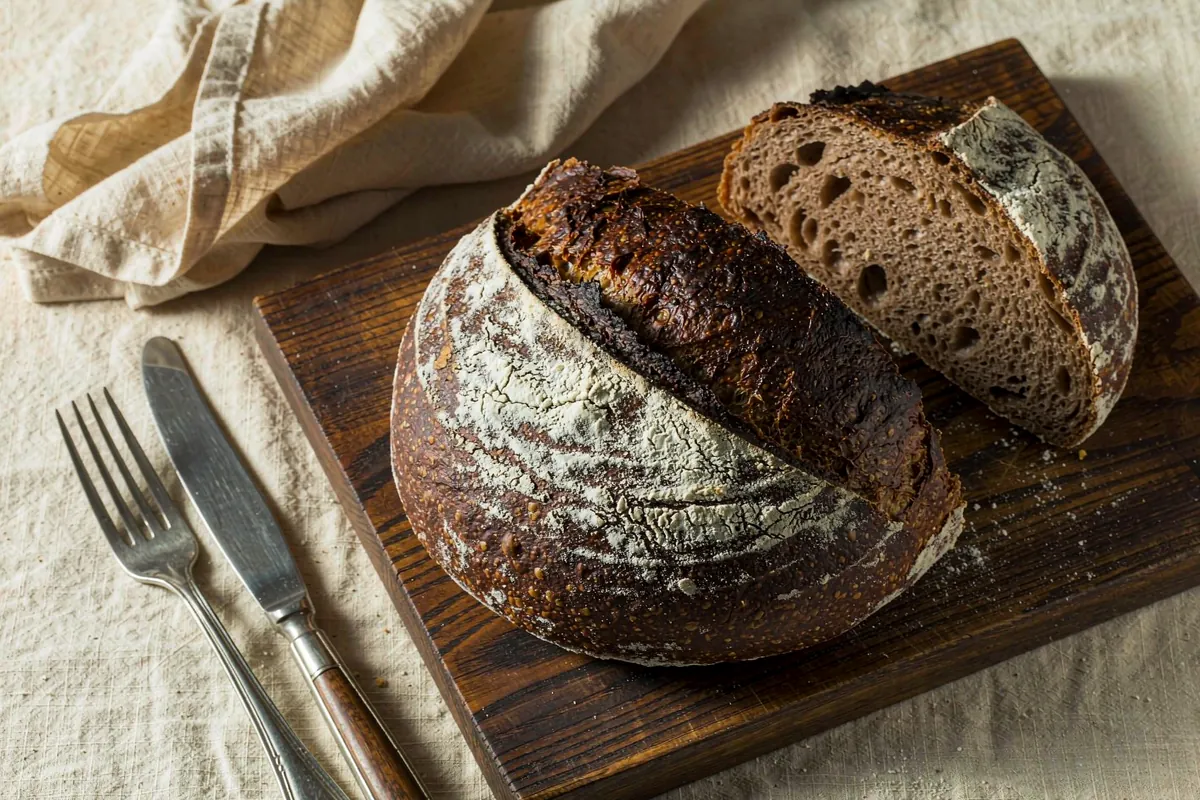
A shaggy, barely mixed dough left overnight develops a blistered, crackling crust and an open, chewy crumb in a covered pot, with almost no hands-on work.
About this dish
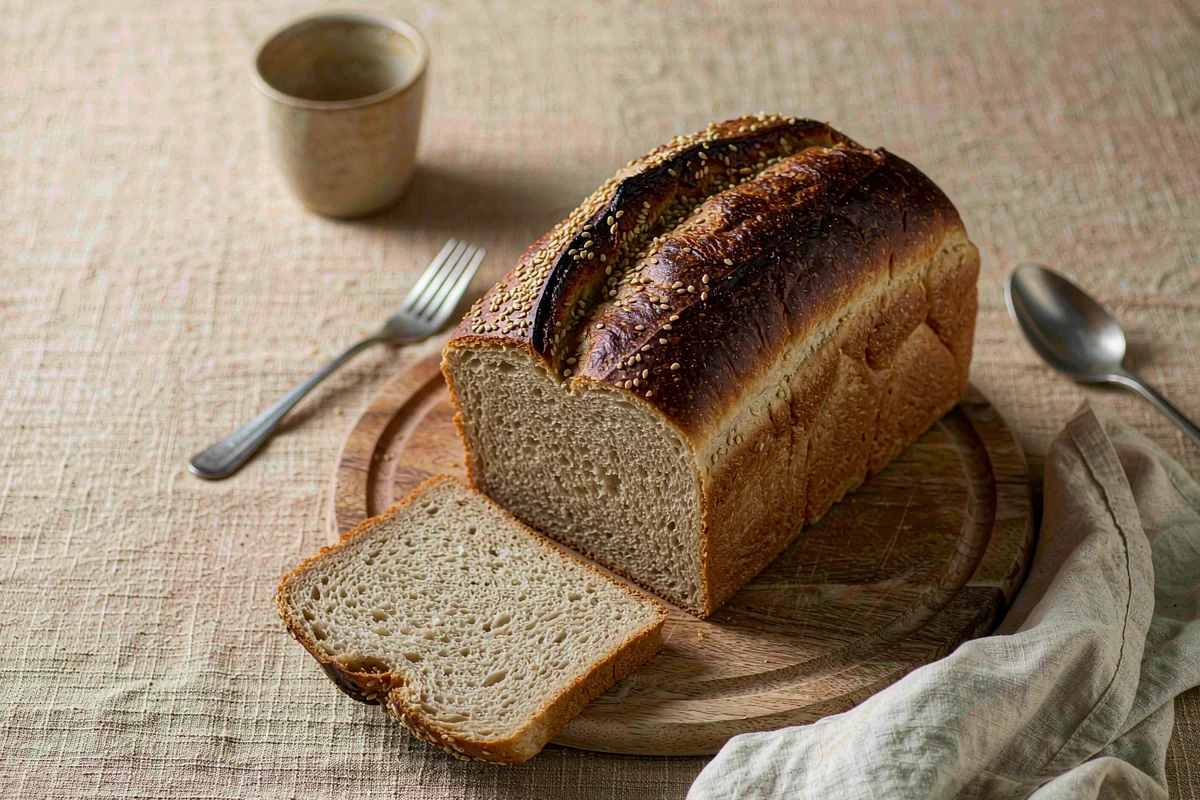
This loaf trades kneading for time. A very wet dough, mixed for thirty seconds and left twelve to eighteen hours, lets enzymes and a pinch of yeast build gluten slowly without any work from you; the long rest also creates a faintly sour, nutty smell. Folded into a round and baked in a preheated covered pot, trapped steam keeps the crust soft at first so the loaf can rise, then the lid comes off for a deep mahogany shell that crackles as it cools.
Before you start
Equipment: Oven, Pot. Tap the ingredient checkboxes as you go.
Method
7 steps · tick each one off as you finish it.
Mix a shaggy dough
Stir 450 g flour, 1 g yeast and 1.5 tsp salt in a bowl for 10 seconds. Pour in 350 ml cool water and mix 30 seconds with a wooden spoon until no dry flour remains; the dough should look rough, sticky and stringy.
Leave it overnight
Cover the bowl with cling film and leave at room temperature for 12 to 18 hours. Wait until the surface is domed and peppered with bubbles, the dough has nearly doubled, and it smells faintly sour and nutty.
Shape without kneading
Dust the counter with 1 tbsp flour, scrape the dough out and fold it over on itself 4 times. Shape into a rough round, seam down, and rest 30 minutes under a cloth; the surface should look taut and slightly puffy.
Preheat the pot
Put a heavy 24 cm pot with its lid into the oven and preheat to 230 °C for 30 minutes. Rub the base with 1 tbsp oil just before the dough goes in; the metal should be very hot.
Bake covered
Dust the dough with 1 tbsp cornmeal, turn it into the hot pot and cover. Bake at 230 °C for 30 minutes; the trapped steam keeps the crust soft so the loaf can swell. Do not lift the lid during this stage.
Finish uncovered
Remove the lid, drop the oven to 200 °C and bake 12 to 15 minutes more, until the crust is a deep mahogany and sounds hollow when tapped. The centre should read about 96 °C on a probe and show no damp streaks.
Cool completely
Lift the loaf onto a rack and cool for at least 1 hour. The crust will crackle as it dries and the open crumb sets; cutting it early gives a gummy interior. Slice into 8 thick pieces with a serrated knife.
Tips that matter
- If your kitchen is warmer than 24 °C, shorten the overnight rest to 10 hours or the dough turns slack and sour.
- Use a pot that can take 230 °C with its lid on; a glass lid or a plastic handle will not survive the preheat.
Easy variations
- Swap 80 g of the white flour for rye flour for a darker, earthier crumb and a longer, slower rise.
- Fold 60 g chopped olives and 1 tbsp rosemary into the dough before the overnight rest.
Questions that come up
Do I really not need to knead it?
No. The long wet rest lets gluten form on its own; the only handling is one gentle fold before shaping.
Why is my crust pale instead of mahogany?
The covered bake was too short or the lid stayed on. Give the uncovered stage a full 12 to 15 minutes at 200 °C.
Nutrition, roughly
| Energy | 170 kcal |
|---|---|
| Protein | 6 g |
| Carbohydrate | 34 g |
| Fat | 1 g |
Estimated per serving from standard ingredients, rounded. Treat it as a guide, not clinical data.
Reading a Rising Dough Instead of a Clock
Temperature, yeast and the four signals that tell you when a loaf is ready to bake, long before the timer does.