Flatbreads & Griddle · French home cooking
Classic French Crepes
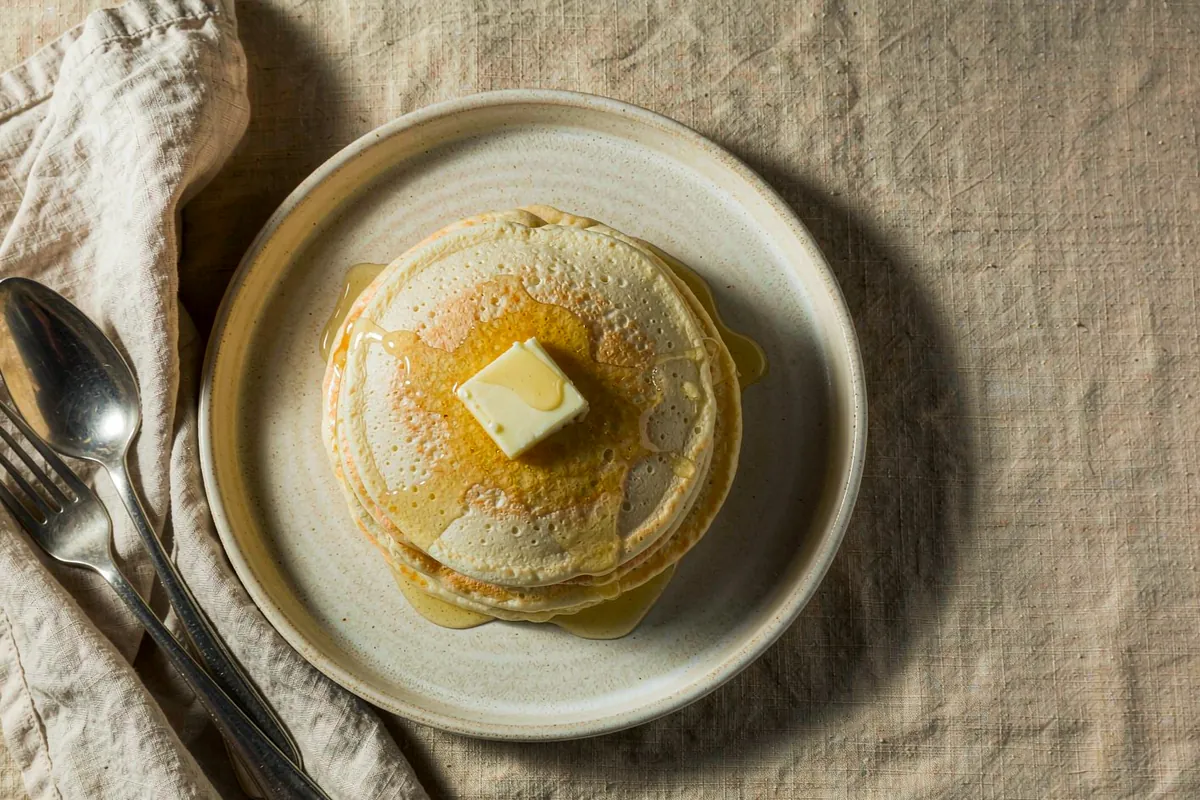
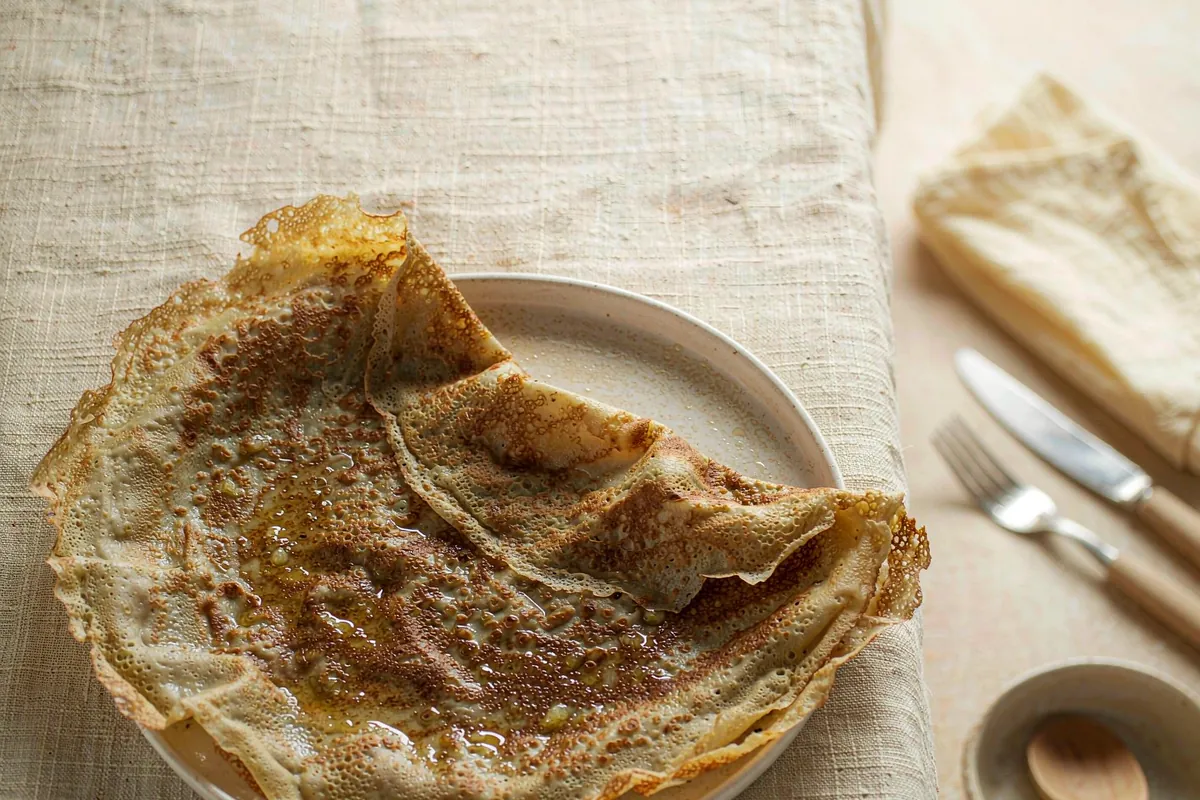
A thin, rested batter of flour, eggs and milk spreads across a buttered pan into pale, lace-edged rounds that stay supple enough to fold around sweet or savory fillings.
About this dish
Crepe batter is the opposite of pancake batter: it should be as thin as single cream and run off a spoon in one unbroken sheet, leaving no trail. A thirty-minute rest matters more than whisking, because it lets the flour hydrate and the bubbles settle so the pan does not tear the delicate skin. Butter the pan and listen for a gentle sigh rather than a sizzle; the smell should be warm milk and browned butter. The first crepe is a test, so adjust the heat before the stack grows.
Before you start
Equipment: Skillet. Tap the ingredient checkboxes as you go.
Method
7 steps · tick each one off as you finish it.
Whisk the base
Whisk the 3 eggs and 500 ml milk in a jug for 30 seconds until fully blended and lightly frothy, then whisk in the melted butter, sugar and salt until the surface looks smooth and slightly glossy.
Add the flour
Sift the 200 g flour into a wide bowl, make a well and pour in a third of the liquid while whisking in small circles from the centre. Add the rest in two additions, whisking just until no dry lumps remain, about 1 minute.
Strain and thin
Pass the batter through a fine sieve to catch any flour lumps, then whisk in 30-60 ml water until it coats a spoon in a thin, even film and runs off without a trail, like single cream.
Rest
Cover and refrigerate 30 minutes. The batter will thicken slightly and lose its foam; a spoon drawn across the top should leave a clean line that fills in within 2 seconds, not hold a ridge.
Heat and butter the pan
Set a 24 cm non-stick skillet over medium heat for 3 minutes until a drop of water sizzles softly. Add 5 g butter, swirl to coat the base and edges, and pour off any excess; the butter should foam, not brown.
Swirl and set
Pour 60 ml batter into the centre, lift the pan and tilt in a circle so it coats the base in one layer, about 5 seconds. Cook 60-75 seconds until the surface turns from glossy to matte and the edge lifts with lace-brown freckles.
Flip, fold, stack
Slide a thin spatula under the crepe, flip and cook 20-30 seconds more until the second side is spotted but still pale. Fold into quarters, slide onto a plate and keep covered with a towel; each crepe should bend without cracking.
Tips that matter
- The first crepe is a calibration: if it sets before you finish swirling, lower the heat and wipe the pan with a cool cloth.
- Strain the batter after resting; even one small lump will drag and tear the thin skin as you tilt the pan.
Easy variations
- For savoury crepes, omit the sugar and whisk 30 g finely chopped herbs into the rested batter.
- Spread each crepe with 20 g melted butter and a squeeze of lemon, then fold and dust with caster sugar.
Questions that come up
How thin should the batter be?
Like single cream. It should coat the back of a spoon in a sheer film and run off in one unbroken sheet without leaving a trail; whisk in 30 ml water at a time if it is thicker.
Why do my crepes tear when I flip them?
Usually the pan was too cool or the crepe too thick, or you lifted before the surface turned matte. Wait for the lacy edge to release freely, then slide a thin spatula underneath.
Nutrition, roughly
| Energy | 210 kcal |
|---|---|
| Protein | 7 g |
| Carbohydrate | 26 g |
| Fat | 9 g |
Estimated per serving from standard ingredients, rounded. Treat it as a guide, not clinical data.
Flour, Water and Rest: Working with Wheat Dough
The three states of a simple dough, how hydration changes them, and why resting time is an ingredient rather than a pause.